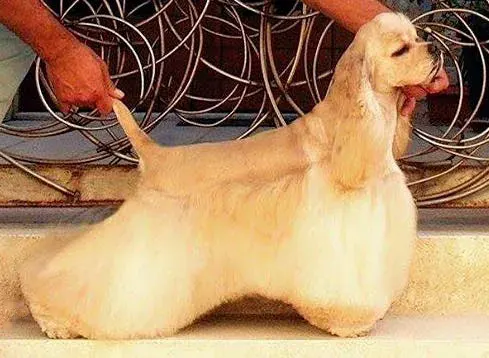
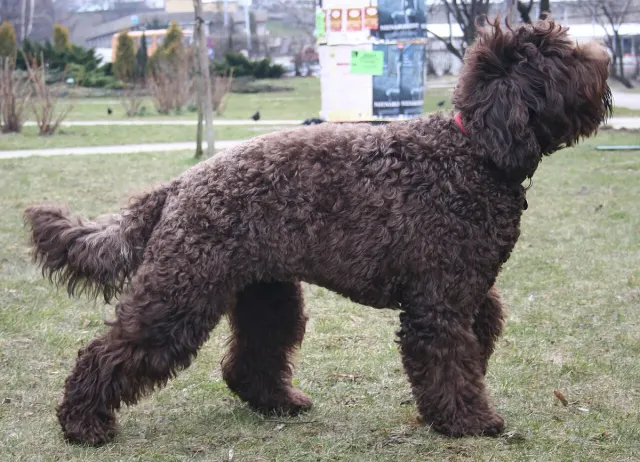
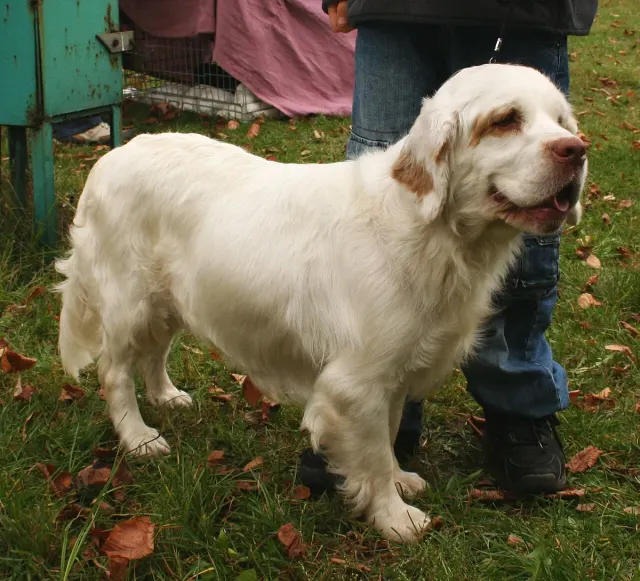
A tireless swimmer with a curly or wavy coat, the Portuguese Water Dog is intelligent, playful and sheds very little.
History and origins
The Portuguese Water Dog helped fishermen on the Algarve coast: it herded fish into nets, retrieved gear that fell overboard and carried messages between boats.
Nearly extinct in the 20th century, it was revived by a dedicated Portuguese shipowner.
Appearance and colours
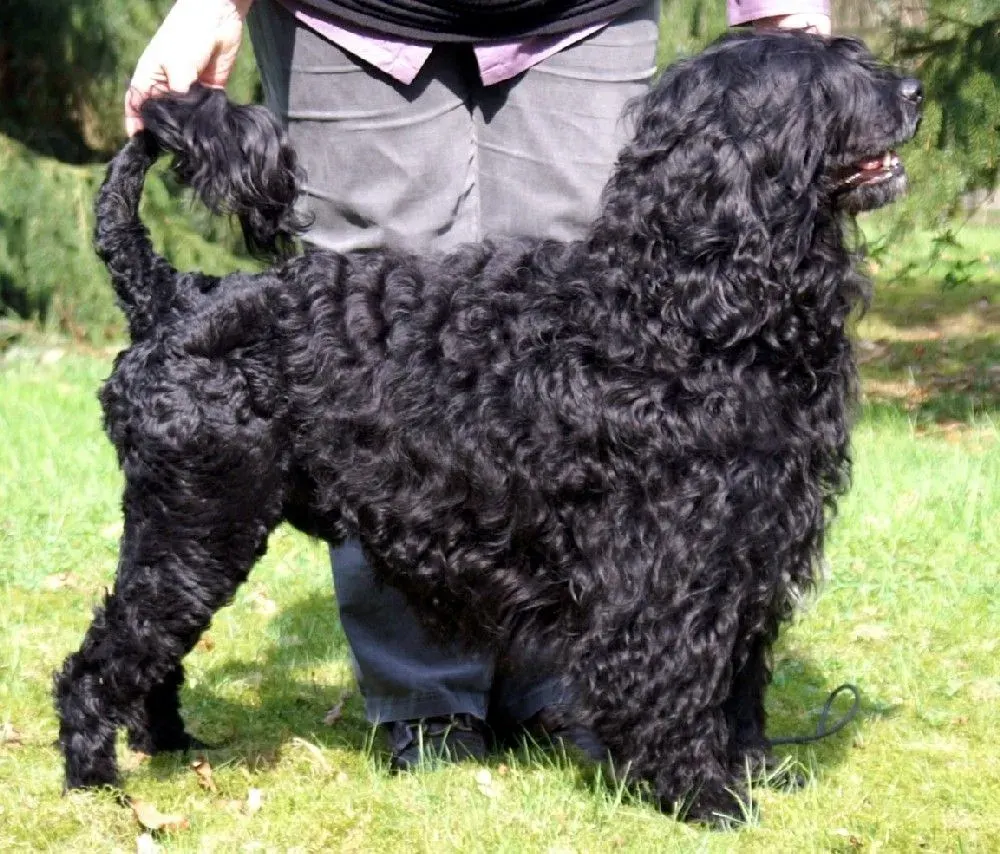
The FCI breed standard describes a well-proportioned, balanced, strong and well-muscled dog, with muscles developed by constant swimming. Its strong coat has no undercoat and comes in two varieties: long and wavy, or shorter and curly, forming compact cylindrical curls.
The coat colour is black or brown in various shades, or solid white; black or brown coats may have some white.
- Height at the withers: 50–57 cm for males (ideal 54 cm), 43–52 cm for females (ideal 46 cm).
- Weight: 19–25 kg for males, 16–22 kg for females.
Temperament
Intelligent, energetic and very affectionate, it is close to its family and usually good with children. It learns very quickly.
It needs occupation: without activity it can become destructive.
With children and other pets
The standard describes an exceptionally intelligent dog that understands and obeys its owner easily and happily; impetuous, wilful, courageous, tireless, and an excellent swimmer and diver. It rates 4 out of 5 with children and 4 out of 5 with other dogs in our ratings.
- It is an energetic family dog that loves water.
- Its coat needs regular care (4 out of 5 for grooming needs in our ratings).
Training tips
According to the standard, the breed was once found along the whole Portuguese coast and became concentrated in the Algarve as fishing methods changed; it is regarded as a native Portuguese breed, used to help fishermen and to retrieve. The Royal Kennel Club describes it as traditionally a fish herder, driving shoals into nets. It rates 5 out of 5 for trainability in our ratings.
- It learns easily with reward-based training.
- Swimming and retrieving games suit it perfectly.
Health
Hip dysplasia, some inherited eye diseases and a rare storage disease should be monitored. Tests are available.
Choose a breeder who tests their breeding dogs.
Common health issues in detail
The Royal Kennel Club recommends as a minimum for breeding dogs a DNA test for progressive retinal atrophy (prcd-PRA), and as best practice hip and elbow scoring and DNA tests for GM1 gangliosidosis and early-onset progressive retinal atrophy (EOPRA).
We found no large population study of health in the Portuguese Water Dog.
This is general information. For any question about your dog's health, consult a veterinarian.
Feeding
Food matched to its activity suits it.
Avoid excess weight.
Exercise
It needs one and a half to two hours of daily activity; swimming is its favourite.
It also excels at agility and obedience.
In summer, walks during the cool hours and a shorter clip are recommended. It suits active families, ideally with beach access; because it sheds little, it appeals to tidy households.
Grooming
Its coat hardly sheds but grows continuously: brush several times a week and clip regularly at the groomer.
Dry its ears well after swimming.
Choosing a puppy
Choose a breeder who does the DNA tests and hip and elbow scoring recommended by the Royal Kennel Club.
- Ask for the parents' DNA, hip and elbow results.
- Meet the mother: she should be confident and friendly.
Our guide on how to recognise a responsible breeder explains what to ask.
Similar breeds
The Spanish Water Dog, Lagotto Romagnolo, Irish Water Spaniel and Poodle are other curly-coated water dogs.