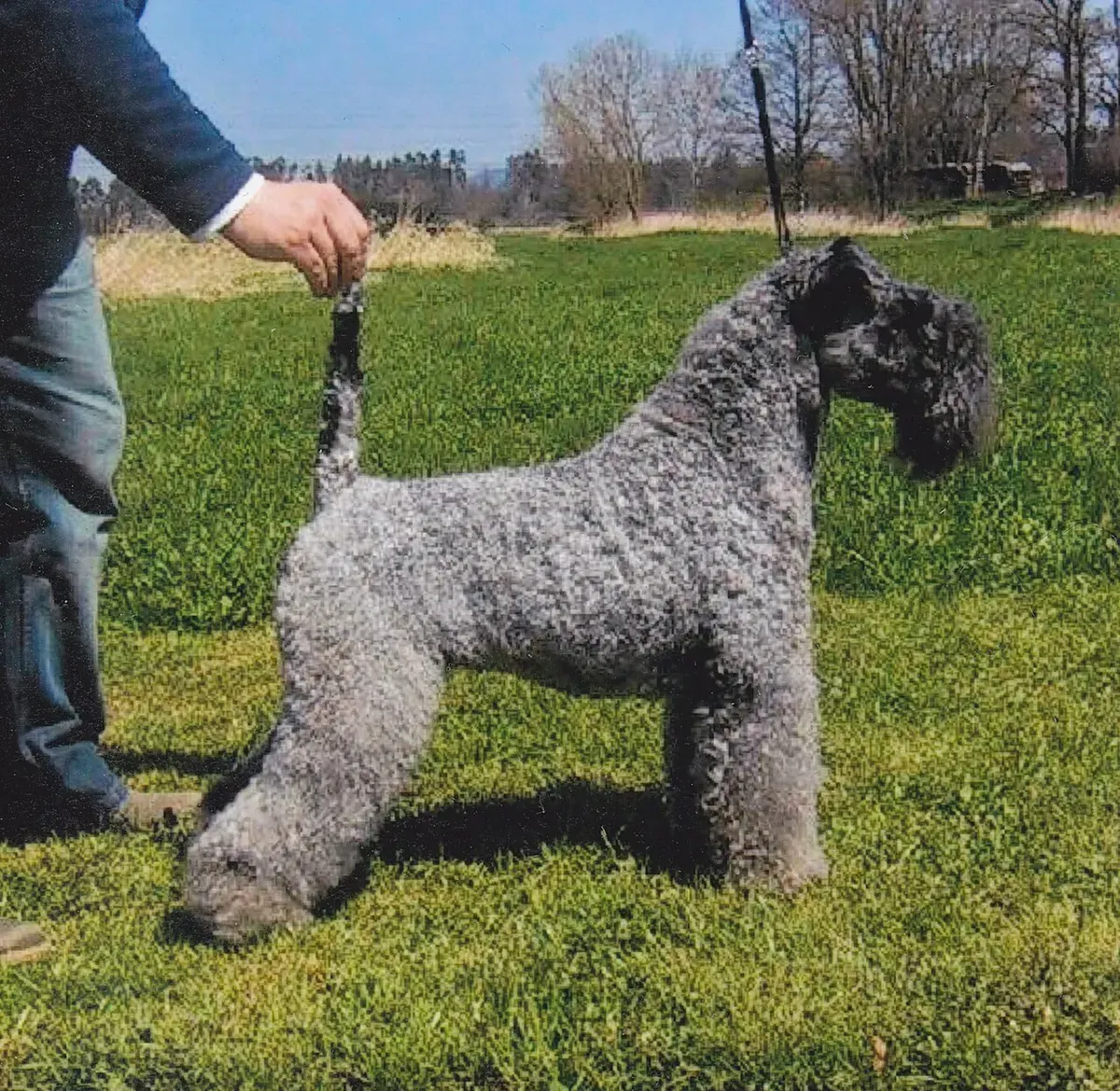
An Irish terrier with a soft, wavy blue-grey coat, the Kerry Blue is versatile, playful and protective, and sheds very little.
History and origins
The Kerry Blue Terrier comes from County Kerry in Ireland, where it was an all-round farm dog: hunting vermin, guarding, herding cattle and even retrieving game.
Puppies are born black and their coat gradually lightens to blue-grey between 18 months and two years.
Appearance and colours
The FCI breed standard describes an upstanding, well-knit and well-proportioned dog with a well-developed, muscular body and definite terrier style. The coat is soft, plentiful and wavy.
The colour is blue of any shade, with or without black points; black is permitted only up to 18 months of age, as is a shade of tan.
- Height at the withers: 45.5–49.5 cm for males, 44.5–48 cm for females.
- Weight: 15–18 kg for males, proportionately less for females.
Temperament
Cheerful, intelligent and very attached to its family, the Kerry Blue is a good watchdog. It can be dominant and intolerant of other dogs.
It needs firm, positive training and early socialisation.
With children and other pets
The standard describes a terrier in character throughout, with a keen and alert expression, a good watchdog and loyal companion. It rates 4 out of 5 with children and 2 out of 5 with other dogs in our ratings.
- It is a loyal family dog.
- Introduce it carefully to other dogs.
Training tips
According to the standard, the Kerry Blue has probably been in Ireland for centuries as a rat catcher and all-round farm dog; a probable reference from 1847 describes a bluish slate-coloured dog, and the breed first appeared at shows in 1913. It was used to tackle otters in deep water, go to ground after badgers and hunt vermin. It rates 3 out of 5 for trainability in our ratings.
- Use consistent, reward-based training.
- Its coat needs regular grooming (4 out of 5 in our ratings).
Health
This is a fairly robust breed. Some eye diseases, skin cysts and a rare inherited neurological condition should be monitored.
Regular veterinary follow-up is recommended.
This is general information. For any question about your dog's health, consult a veterinarian.
Feeding
Good-quality food matched to its activity suits it.
Watch its weight.
Exercise
It needs about an hour of daily activity: games, walks, obedience and agility.
Keep it on a lead near other dogs.
Walk it during the cool hours in summer. It can live in an apartment if it gets enough exercise, and because it sheds little it suits tidy households.
Grooming
Its soft, wavy coat grows continuously and hardly sheds, but it tangles: brush several times a week and trim every six to eight weeks.
Clean its beard.
Choosing a puppy
The FCI standard says only healthy dogs with typical breed conformation should be used for breeding.
- Ask what health checks the parents have had.
- Meet the mother: she should be alert and friendly.
Our guide on how to recognise a responsible breeder explains what to ask.
Similar breeds
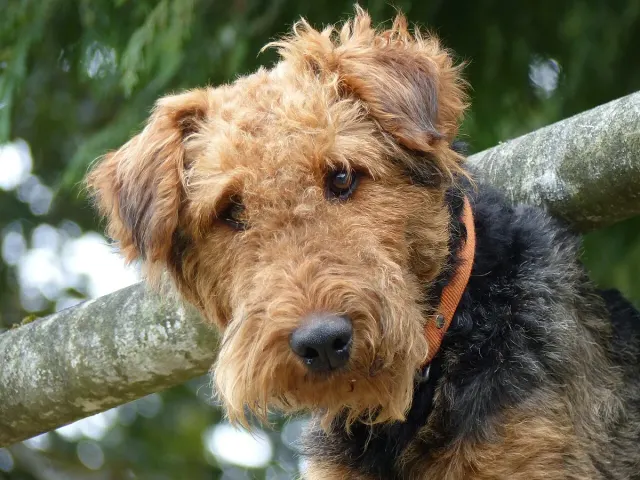
The Irish Terrier and Soft-coated Wheaten Terrier are the other Irish terriers. The Bedlington Terrier and Airedale Terrier are other long-legged terriers.