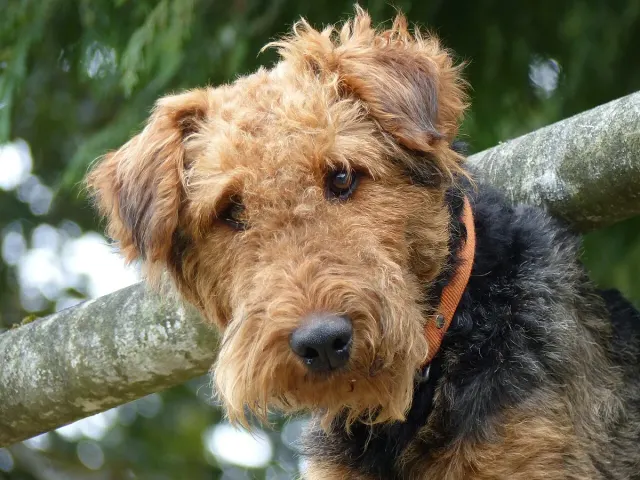
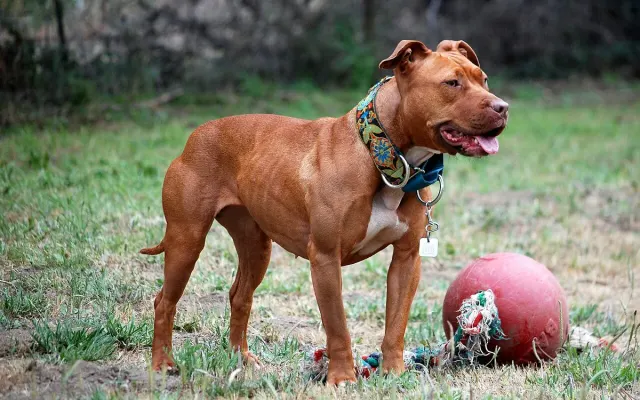
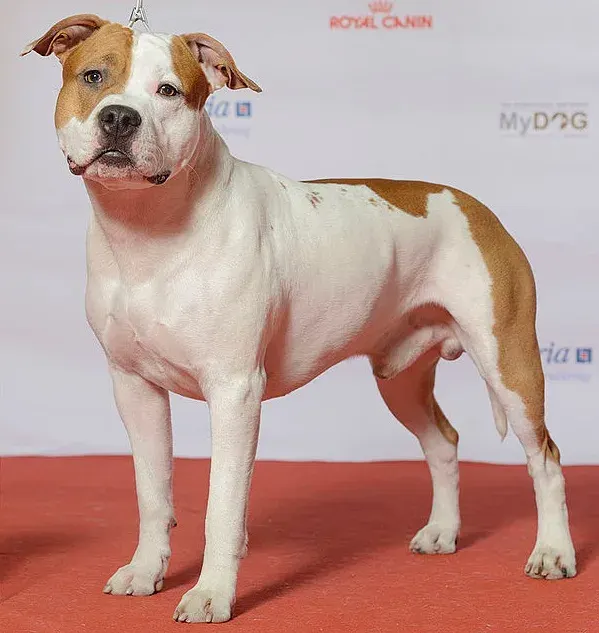
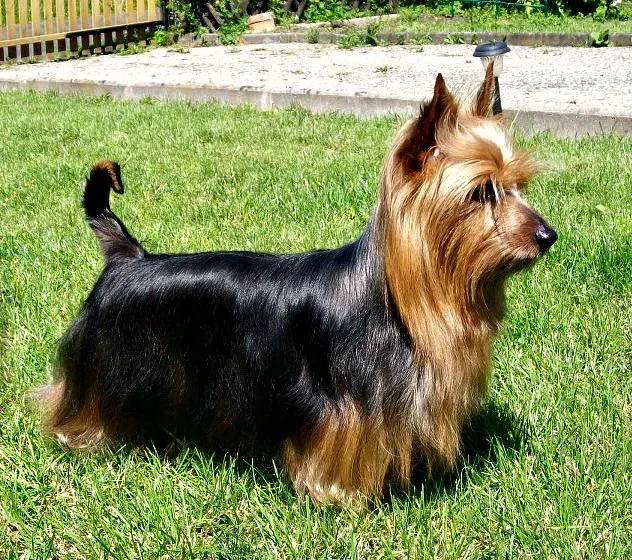
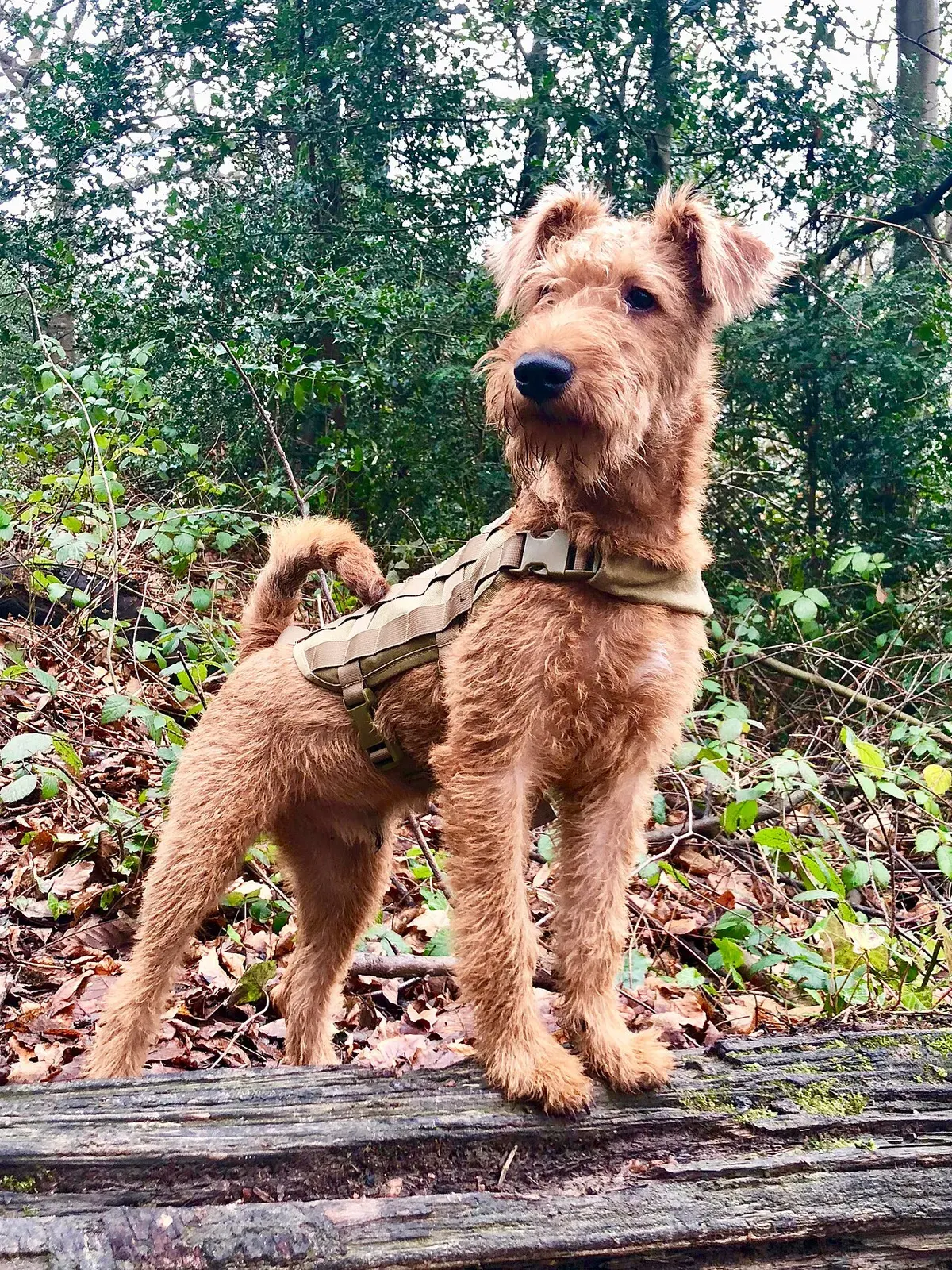
A racy red terrier with a fiery temperament, the Irish Terrier is brave, loyal and very affectionate with its family.
History and origins
The Irish Terrier is one of the oldest terrier breeds. In Ireland it guarded farms, hunted vermin and accompanied hunters.
During the First World War it served as a messenger dog, renowned for its courage.
Appearance and colours
The FCI breed standard describes an active, lively, lithe and wiry dog with plenty of substance but no clumsiness, built on "lines of speed" with a graceful, racy outline. The coat is dense and wiry, broken in appearance but lying flat, with only a slight beard.
The Royal Kennel Club lists red, red wheaten, rust and wheaten colours.
- Height at the withers: about 45.5 cm.
- Weight: about 12.25 kg for males, 11.4 kg for females.
Temperament
Brave, spirited and very attached to its people, the Irish Terrier is gentle with children but often intolerant of other dogs.
It needs consistent training and early socialisation.
With children and other pets
The standard describes a dog that is game and can hold its own with other dogs, yet remarkably loyal, good-tempered and affectionate with people; once attacked, it has the courage of a lion. It rates 4 out of 5 with children and 2 out of 5 with other dogs in our ratings.
- It is affectionate with its family.
- Introduce it carefully to other dogs.
Training tips
According to the standard, Ireland has produced four terrier breeds, and the Irish Terrier may be the oldest; its colour was not fixed until the late 19th century, when black and tan and brindle were bred out, and its reputation grew during the First World War, when Irish Terriers served as messenger dogs. The Royal Kennel Club says its fiery spirit and daredevil nature match its bright red coat. It rates 3 out of 5 for trainability in our ratings.
- Use consistent, reward-based training.
- It rates 4 out of 5 for energy: give it plenty of exercise.
Health
This is a robust breed. Paw pad problems (hyperkeratosis) and an inherited urinary condition (cystinuria) have been reported.
Regular veterinary follow-up is recommended.
Common health issues in detail
The Royal Kennel Club recommends as best practice for breeding dogs a DNA test for hereditary footpad hyperkeratosis (HFH), a thickening of the pads, and notes that the breed can be affected by conformation-related problems.
We found no large population study of health in the Irish Terrier.
This is general information. For any question about your dog's health, consult a veterinarian.
Feeding
Good-quality food matched to its activity suits it.
Avoid excess weight.
Exercise
It needs about an hour of daily activity: running, games and hiking.
Keep it on a lead around other dogs.
The Irish Terrier copes fairly well with heat if its coat is well maintained; walk it during the cool hours in summer. It can live in an apartment if it gets enough exercise and is well trained.
Grooming
Its wiry coat needs weekly brushing and hand-stripping two or three times a year. It sheds little.
Clean its beard.
Choosing a puppy
Choose a breeder who does the HFH DNA test.
- Ask for the parents' HFH results.
- Meet the mother: she should be friendly and confident.
Our guide on how to recognise a responsible breeder explains what to ask.
Similar breeds
The Welsh Terrier and Airedale Terrier are other long-legged terriers. The Kerry Blue Terrier and Soft-coated Wheaten Terrier are the other Irish terriers.