Great Dane
An elegant giant with a gentle nature, the Great Dane is a calm, affectionate companion, but its size demands suitable space and budget.
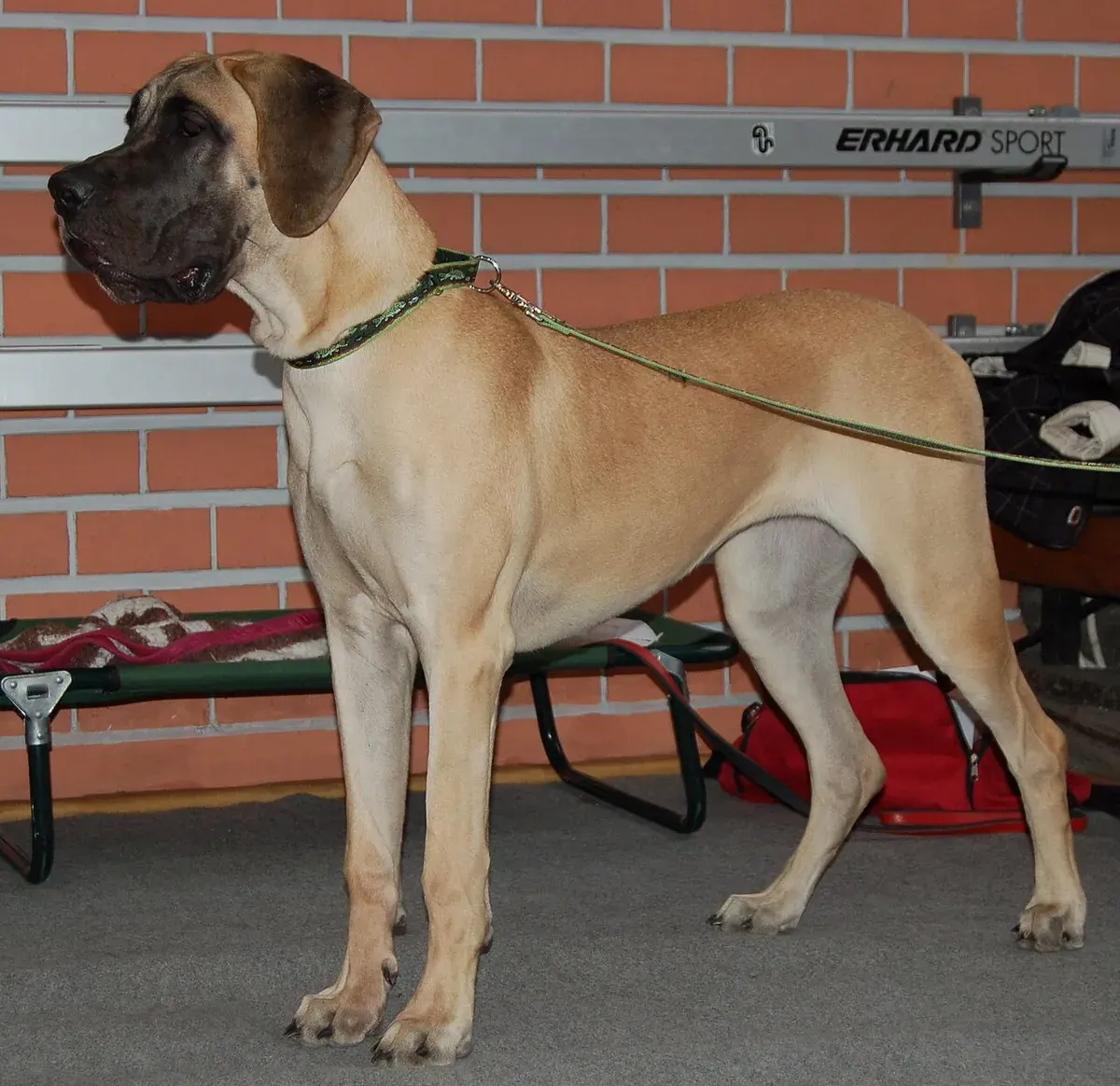
History and origins
The Great Dane descends from boar-hunting dogs used by the German nobility, bred from crosses between mastiffs and sighthounds. It later became a guard dog and a status symbol.
It is among the tallest dogs in the world.
Temperament
Calm, gentle and affectionate, the Great Dane is often called a 'gentle giant'. It is usually patient with children, although its size means play with little ones must be supervised.
Sensitive, it needs early, consistent training: a poorly trained 70 kg dog quickly becomes unmanageable.
Health
Its short life expectancy is partly due to its size. Bloat is a major risk and a life-threatening emergency; dilated cardiomyopathy, dysplasia and bone cancer are also reported.
Learn to recognise the signs of bloat (swollen belly, restlessness, unproductive retching) and see a vet immediately.
This is general information. For any question about your dog's health, consult a veterinarian.
Feeding
Puppies should grow slowly on large-breed food. For adults, split the ration into two or three meals and enforce rest after eating.
A raised bowl is not always recommended, so ask your veterinarian.
Exercise
Moderate daily walks are enough. Avoid running and jumping during growth, which lasts until about two years of age.
At home, it mostly enjoys a large, comfortable bed.
Its short coat helps it cope with heat, but its size calls for caution: walks in the cool hours, shade and fresh water in summer. A house with a garden suits it better than an apartment. Plan for a large enough vehicle and a substantial food and veterinary budget.
Grooming
Its very short coat needs very little care: a weekly rub with a grooming mitt is enough.
Provide a thick bed to prevent elbow calluses.