One of the tallest dogs in the world, the Irish Wolfhound is a gentle giant: calm, patient and very sociable.
History and origins
The Irish Wolfhound descends from the great hunting and war hounds of ancient Ireland, used to hunt wolf and deer. After the wolf disappeared from Ireland, the breed nearly died out.
It was rebuilt in the 19th century and remains an Irish national symbol.
Appearance and colours
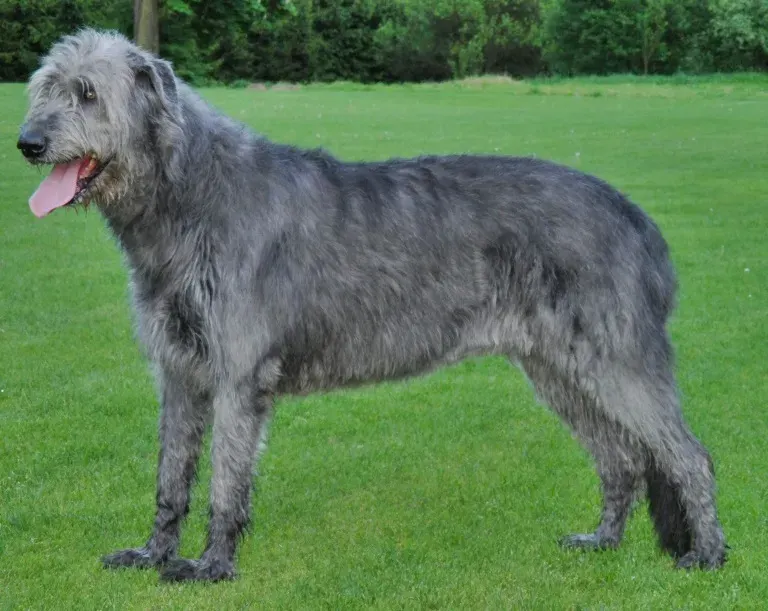
The FCI breed standard describes the largest and tallest of the sighthounds: a rough-coated hound of great size and commanding appearance, very strong and muscular yet gracefully built, with easy, active movement and a long tail. The coat is rough and hard, especially wiry over the eyes and on the beard.
The recognised colours are grey, brindle, red, black, pure white, fawn and wheaten; white markings are allowed only on the chest, toes and tail tip.
- Desired minimum height: 79 cm for males, 71 cm for females.
- Minimum weight: 54.5 kg for males, 40.5 kg for females, increasing with height.
Temperament
Gentle, patient and calm, the Irish Wolfhound is affectionate with the whole family and usually friendly with other dogs. It is not a guard dog.
It learns through gentle training; its size means good leash manners must be taught from an early age.
With children and other pets
The standard describes a gentle, kind, loyal hound, friendly towards people and other dogs: "a lamb in the home and a lion in the chase". It rates 4 out of 5 with children and 4 out of 5 with other dogs in our ratings.
- It is a gentle companion, but its size needs space.
- Its chasing instinct is strong: be careful with small animals.
Training tips
According to the standard, Irish Wolfhounds were well established in Ireland by the first century AD and were used until the end of the 17th century to hunt wolves, boar and deer; the first breed standard dates from 1885, and the breed is one of the official symbols of Ireland. The Royal Kennel Club calls it a gentle giant, the tallest of all breeds. It rates 3 out of 5 for trainability in our ratings.
- Keep exercise gentle while it is growing.
- Avoid exercise in the heat: it rates 1 out of 5 for heat tolerance.
Health
Like many giant breeds, it has a short life expectancy. It is prone to heart disease (dilated cardiomyopathy), bone cancer and gastric torsion (bloat).
Regular veterinary follow-up, including heart checks, is recommended.
Common health issues in detail
Heart rhythm problems are a known concern. A North American pedigree study of 327 Irish Wolfhounds with atrial fibrillation, an irregular heart rhythm, estimated its heritability at 0.69 and found a pattern consistent with dominant inheritance. In a UK study of giant breeds, the median age at death of Irish Wolfhounds was 7.2 years, based on only 31 deaths.
The Royal Kennel Club recommends eye testing as best practice for breeding dogs, notes that the breed has a breed club health scheme, and says it can be affected by conformation-related problems.
This is general information. For any question about your dog's health, consult a veterinarian.
Feeding
Giant-breed food over several meals suits it; puppy growth should be slow and supervised.
No exertion just before or after meals.
Exercise
It needs daily walks and the chance to run in a large enclosed area, without overdoing it while growing.
Indoors, it is very calm.
Its size makes it poorly suited to apartments; it needs a house with a garden.
Grooming
Its wiry coat needs weekly brushing; light hand-stripping keeps it tidy.
Provide thick bedding to protect its joints.
Choosing a puppy
Choose a breeder who takes part in the breed club health scheme and screens the parents' hearts.
- Ask whether the parents have had heart screening (ECG and ultrasound).
- Ask how long the parents' relatives lived.
- Meet the mother: she should be gentle and calm.
Our guide on how to recognise a responsible breeder explains what to ask.
Similar breeds
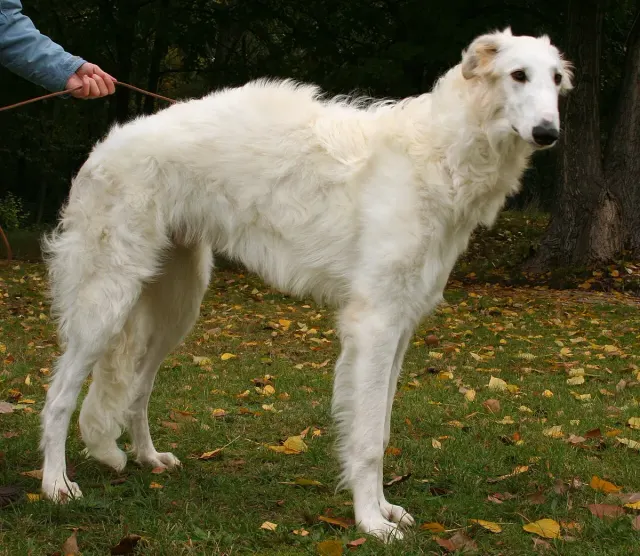
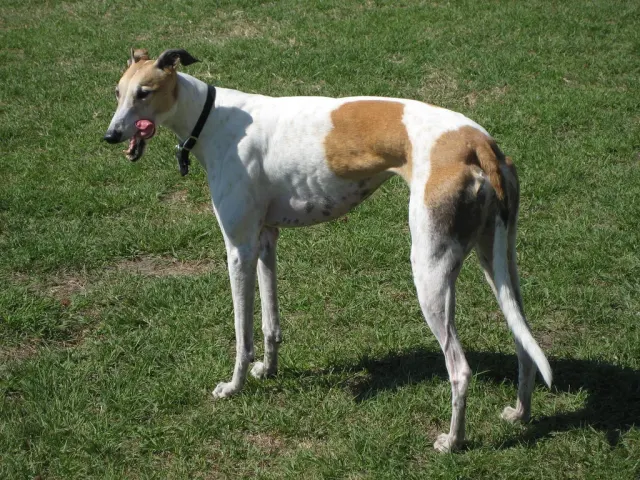
The Scottish Deerhound is its closest relative. The Great Dane is another very tall giant, and the Borzoi and Greyhound other sighthounds.