Nicknamed the 'grey ghost' for its silver coat, the Weimaraner is an elegant, energetic hunter deeply attached to its owners.
History and origins
The Weimaraner was developed in the 19th century at the court of Weimar, Germany, to hunt big game and later as a versatile pointing dog.
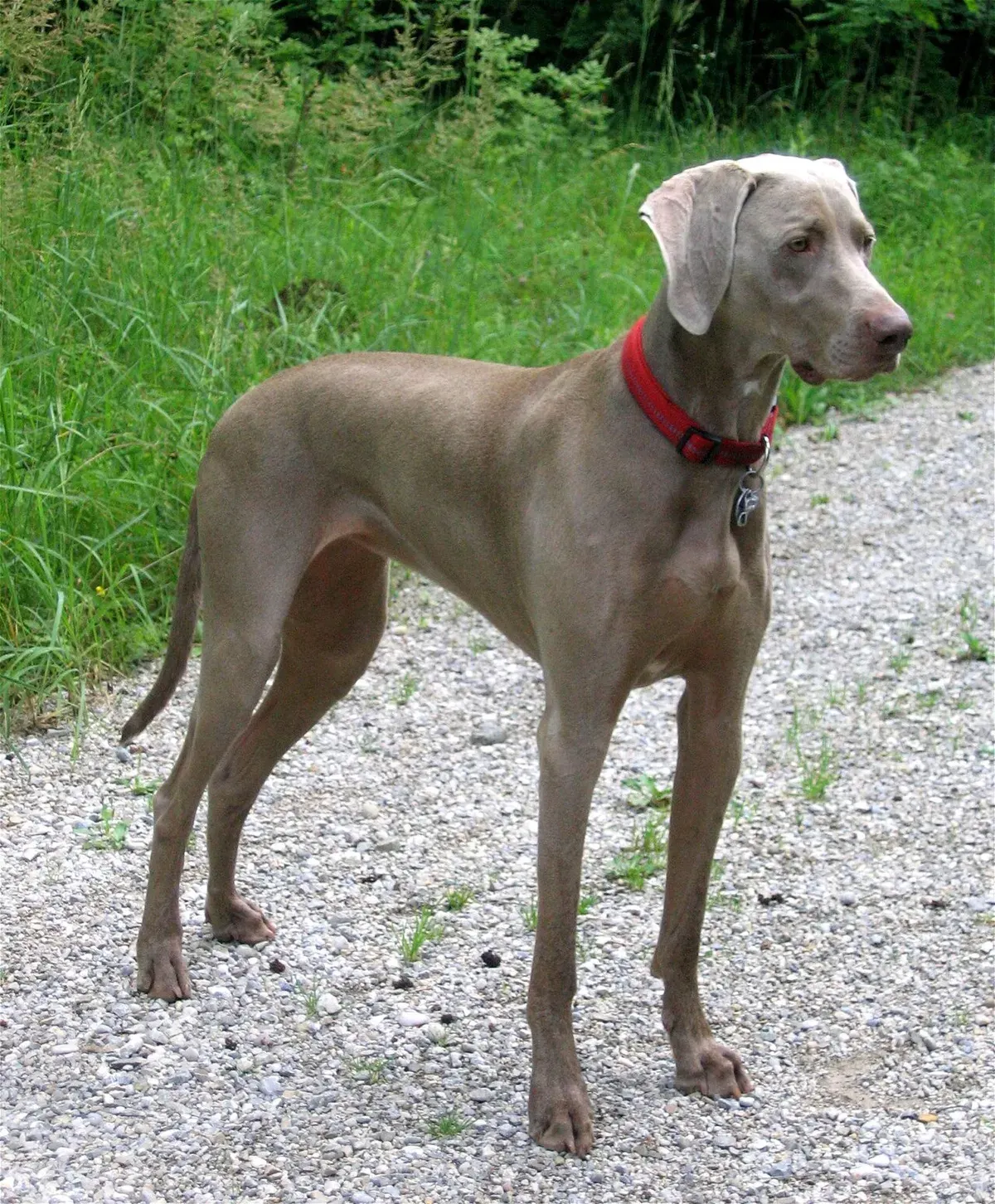
Its silver-grey coat and light eyes make it instantly recognisable.
Appearance and colours
The FCI breed standard describes a medium to large hunting dog of functional working type, pleasing in shape, sinewy and very muscular, with males and females easy to tell apart. There are two coats: short-haired (short, strong, very dense and smooth, with little or no undercoat) and long-haired (soft and long, 3–5 cm on the flanks, with feathering).
The colour is silver, roe or mouse grey, or shades of these; only small white markings on the chest and toes are permitted.
- Height at the withers: 59–70 cm for males, 57–65 cm for females.
- Weight: about 30–40 kg for males, 25–35 kg for females.
Temperament
Energetic, intelligent and very affectionate, the Weimaraner wants to be with its family at all times and copes very badly with being alone. It can be protective and wary of strangers.
It needs early, consistent training and intense activity.
With children and other pets
The standard describes a versatile, easily trained, steady and passionate hunting dog, persevering but not too lively, and a good watchdog without aggressiveness. It rates 4 out of 5 with children and 3 out of 5 with other dogs in our ratings.
- It suits active families who can give it work and exercise.
- It rates 5 out of 5 for energy.
Training tips
According to the standard, the Weimaraner was already kept at the court of Weimar in the first third of the 19th century; it was then bred mainly by professional hunters and gamekeepers in central Germany. The Royal Kennel Club notes that its silver-grey coat earned it the nickname "Grey Ghost". It rates 4 out of 5 for trainability in our ratings.
- Retrieving, tracking and scent work suit it.
- Use consistent, reward-based training.
Health
Bloat is a significant risk in the breed. Hip dysplasia and some immune conditions should also be monitored.
Regular veterinary follow-up is recommended.
Leishmaniasis prevention is important.
Common health issues in detail
The Royal Kennel Club recommends as best practice for breeding dogs hip and elbow scoring and eye testing.
We found no large population study of health in the Weimaraner.
This is general information. For any question about your dog's health, consult a veterinarian.
Feeding
Split its ration into two meals and avoid exercise straight afterwards to reduce the risk of bloat.
Adjust the amount to its activity.
Exercise
It needs at least two hours of daily activity: running, hunting, canicross and swimming.
Without an outlet, it quickly becomes anxious or destructive.
It needs a house with a garden and a very present, sporty family.
Grooming
Its short, smooth coat needs only weekly brushing.
Check its ears and paw pads.
Choosing a puppy
Choose a breeder who scores hips and elbows and eye-tests the parents.
- Ask for the parents' hip, elbow and eye results.
- Meet the mother: she should be steady and friendly.
Our guide on how to recognise a responsible breeder explains what to ask.
Similar breeds
The Hungarian Vizsla, German Shorthaired Pointer, English Pointer and Bracco Italiano are other short-coated pointing dogs.