Elegant, muscular and full of energy, the German Pinscher is a lively, watchful dog and an ancestor of the Dobermann and Miniature Pinscher.
History and origins
The German Pinscher is an old breed used on German farms and in stables to catch rodents and raise the alarm. It contributed to the creation of the Dobermann and the Miniature Pinscher.
After becoming rare following the two World Wars, it was saved by a few breeders.
Appearance and colours
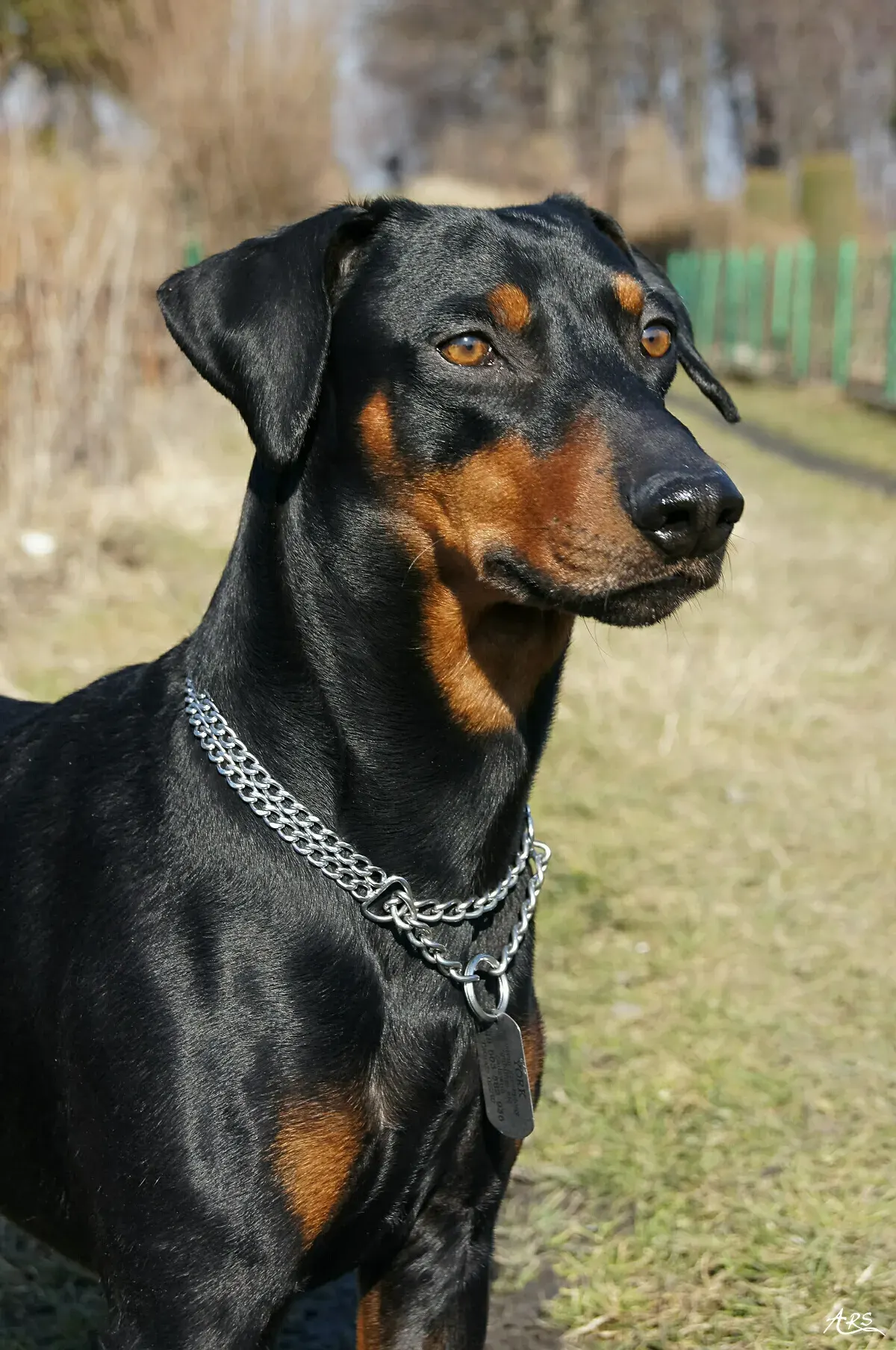
The FCI breed standard describes a smooth-haired, medium-sized dog of proud carriage, with flowing outlines and an elegant, square build, as strong as the Schnauzer; its well-developed muscles show clearly under the coat. The coat is short, dense, smooth, close and shiny.
Colours are solid deer red to reddish-brown or dark red-brown, or black and tan, with markings as dark and clearly defined as possible.
- Height at the withers: 45–50 cm.
- Weight: 14–20 kg.
Temperament
Lively, curious and self-assured, the German Pinscher is an excellent watchdog, attached to its family and reserved with strangers.
Intelligent but sometimes stubborn, it needs consistent training and varied activities.
With children and other pets
The standard describes a lively, spirited, self-assured and even-tempered dog whose intelligence and endurance make it an agreeable family, watch and companion dog. It rates 3 out of 5 with children and 3 out of 5 with other dogs in our ratings.
- It is a good watchdog.
- It needs daily activity and mental work.
Training tips
According to the standard, the German Pinscher is a very old breed, recorded in the German Stud Book as early as 1880, and shares its ancestors with the Schnauzer, once called the rough-coated Pinscher. The Royal Kennel Club describes it as good-natured and fearless, with roots as a rat catcher. It rates 3 out of 5 for trainability in our ratings.
- Use consistent, reward-based training.
- It rates 4 out of 5 for energy: give it plenty of exercise.
Health
This is a fairly robust breed. Hip dysplasia, some eye diseases and von Willebrand disease have been reported.
Ask for the parents' screening results.
This is general information. For any question about your dog's health, consult a veterinarian.
Feeding
Good-quality food matched to its activity suits it.
Watch its weight to keep its athletic build.
Exercise
It needs one to two hours of activity a day: running, games, obedience and agility.
Its hunting instinct calls for supervision around small animals.
Its very short coat helps it cope with heat, but avoid exertion in the hot hours and provide shade. In winter it may feel cold in mountain areas. It thrives in a house with a garden; an apartment is only realistic with plenty of daily activity.
Grooming
Its short, glossy coat needs only a weekly rub with a grooming mitt.
It feels the cold somewhat in winter.
Choosing a puppy
The FCI standard says only healthy dogs with typical breed conformation should be used for breeding.
- Ask what health checks the parents have had.
- Meet the mother: she should be confident and even-tempered.
Our guide on how to recognise a responsible breeder explains what to ask.
Similar breeds
The Miniature Pinscher is its smaller relative and the Standard Schnauzer its rough-coated cousin. The Dobermann and Manchester Terrier are other smooth black-and-tan breeds.