A deeply loyal Brazilian mastiff, the Fila Brasileiro is a guardian highly suspicious of strangers, for experienced owners only.
History and origins
The Fila Brasileiro was developed in Brazil from mastiffs and hunting dogs brought by European settlers. It guarded large estates, drove cattle and tracked big game.
Its natural distrust of strangers, called 'ojeriza', is part of its breed standard.
Appearance and colours
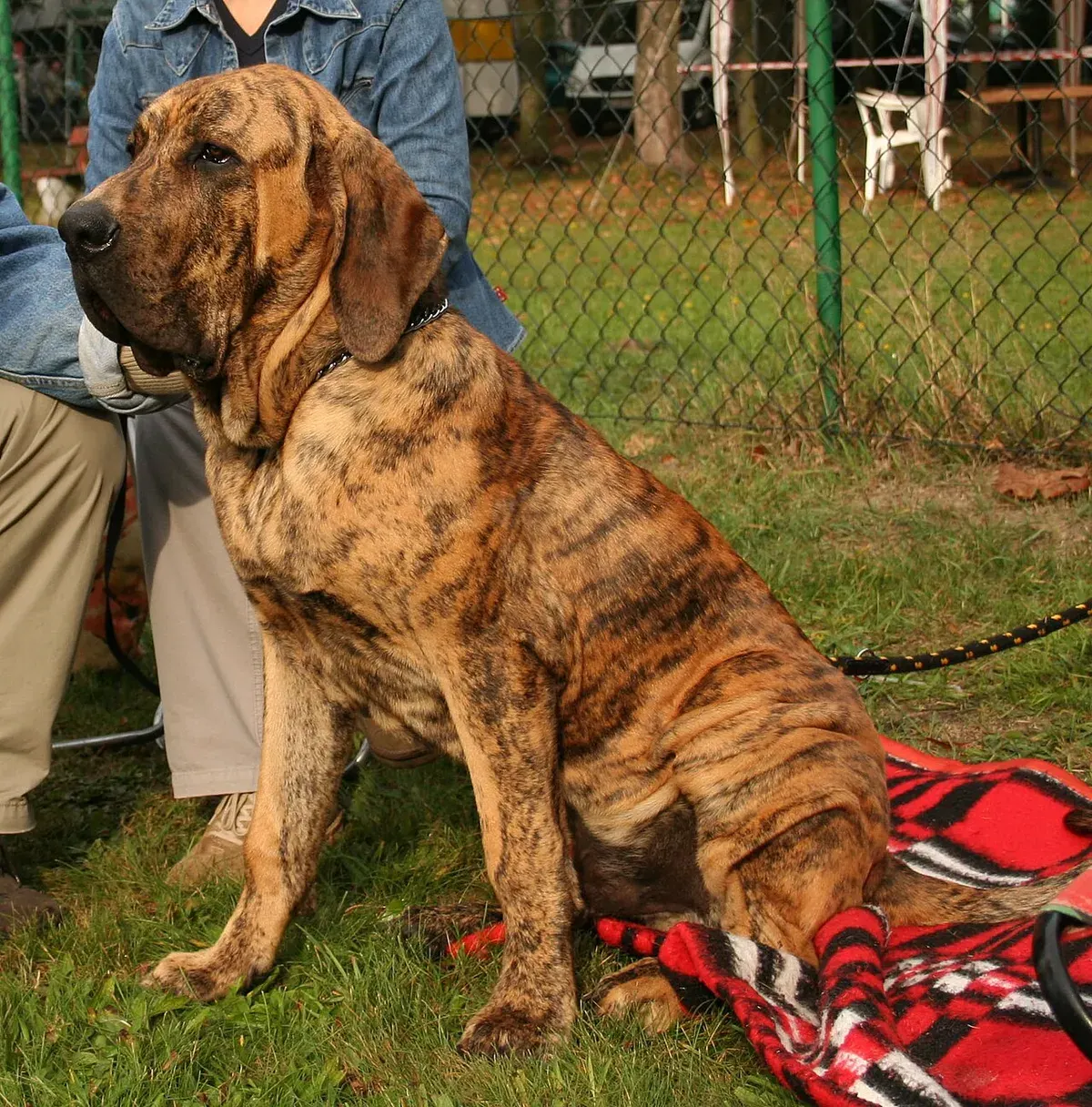
The FCI breed standard describes a typical molosser with powerful bones and a rectangular, compact but harmonious build, combining a massive body with a great deal of agility; males and females should look clearly different. The coat is short, smooth, dense and close to the body.
Colours are brindle, fawn and black, with or without a black mask; white markings are allowed on the feet, chest and tail tip.
- Height at the withers: 65–75 cm for males, 60–70 cm for females.
- Weight: at least 50 kg for males, at least 40 kg for females.
Temperament
Extremely loyal and protective of its family, the Fila is openly hostile to strangers. It is calm and self-assured at home.
It requires a very experienced owner, intensive socialisation and strict management of visitors.
Some regions restrict ownership of this breed; check your local regulations.
With children and other pets
The standard describes a courageous, determined dog, docile, obedient and extremely tolerant with its own family and children, and insistently seeking its owner's company. It also notes a natural aloofness towards strangers, especially on its own territory. It rates 2 out of 5 with children and 1 out of 5 with other dogs in our ratings.
- It suits only very experienced owners with a secure property.
- Early, careful socialisation is essential.
Training tips
The FCI classifies the Fila Brasileiro, from Brazil, as a watchdog. The standard calls it an unsurpassed guardian of property that also instinctively takes to big-game hunting and cattle herding, and notes that it remains calm and unperturbed by strange noises or situations. It rates 2 out of 5 for trainability in our ratings.
- Use calm, consistent, reward-based training from an early age.
- The standard requires that it accept controlled handling, especially in the show ring.
Health
Hip and elbow dysplasia, bloat and some eyelid problems should be monitored.
Regular veterinary follow-up is essential, with handling practised from puppyhood.
This is general information. For any question about your dog's health, consult a veterinarian.
Feeding
Large-breed food in two meals and slow growth are recommended.
Avoid exercise after meals.
Exercise
It needs daily walks and a large, secure property.
Avoid crowded places.
Coming from a hot country, it copes reasonably with heat when it has shade and water. It is unsuited to apartments and city life.
Grooming
Its short coat needs weekly brushing.
Clean its lips and folds as needed.
Choosing a puppy
The FCI standard says only healthy dogs with typical breed conformation should be used for breeding.
- Ask what health checks the parents have had.
- Meet the mother: she should be calm and self-assured.
- Check whether local rules apply to this breed where you live.
Our guide on how to recognise a responsible breeder explains what to ask.
Similar breeds
The Mastiff, Neapolitan Mastiff and Boerboel are other large guardian molossers. The Dogo Argentino is another South American molosser.