A shaggy, medium-sized herder, the Polish Lowland Sheepdog is lively, intelligent and a good watchdog with an excellent memory.
History and origins
The Polish Lowland Sheepdog (Polski Owczarek Nizinny, or PON) has herded flocks on the plains of Poland for centuries and influenced other long-haired herding breeds in Europe.
Nearly lost after the Second World War, it was rebuilt from a few dogs.
Appearance and colours
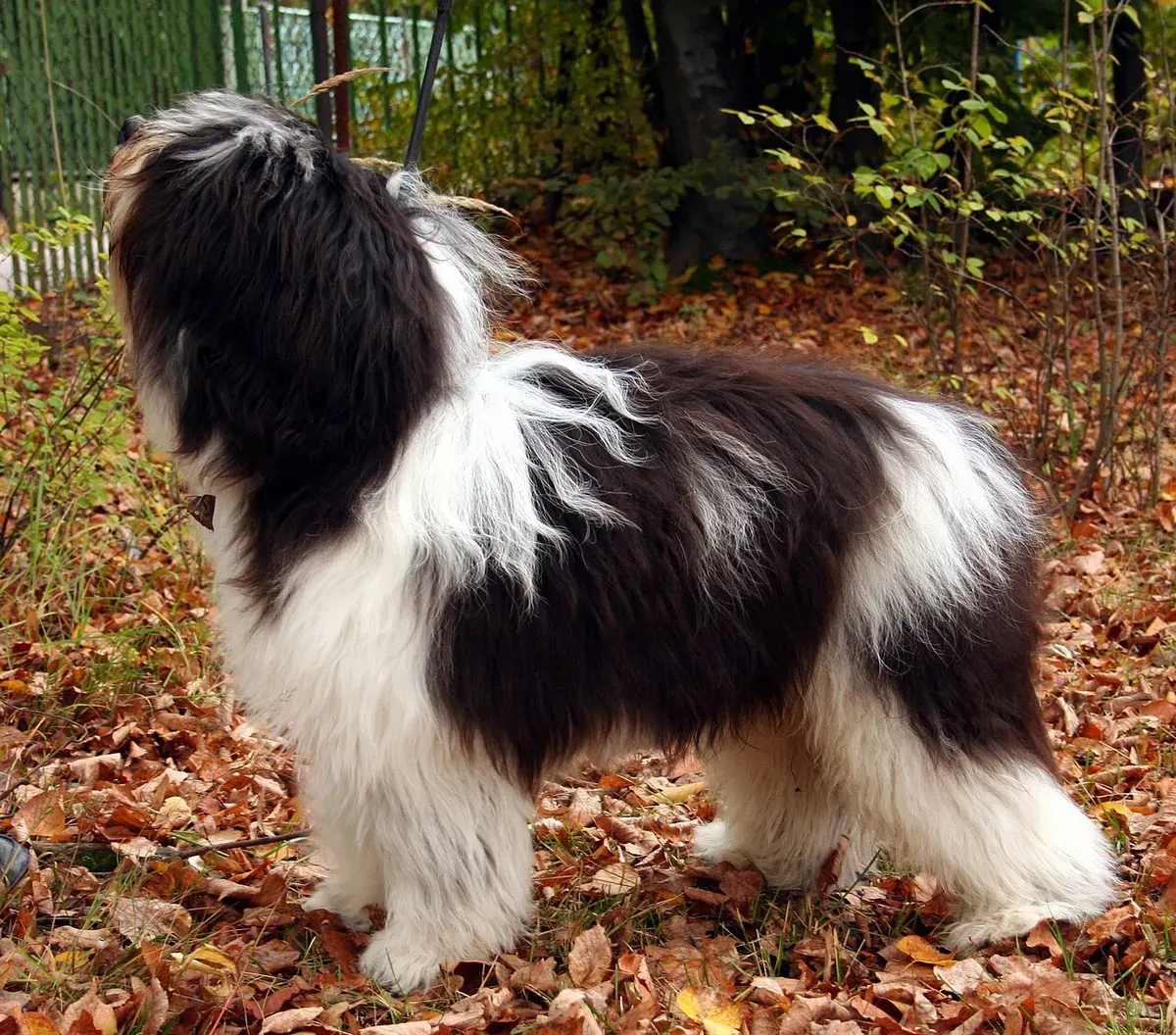
The FCI breed standard describes a medium-sized, compact, strong and muscular dog with a thick, long coat. The whole body is covered with coarse, dense, profuse hair over a soft undercoat, straight or slightly wavy; the hair from the forehead falls over the eyes.
All colours and patches are acceptable.
- Height at the withers: 45–50 cm for males, 42–47 cm for females.
Temperament
Lively, confident and very attached to its family, the PON is a good watchdog, reserved with strangers. It is known for its memory and powers of observation.
Independent and sometimes dominant, it needs consistent training from an early age.
With children and other pets
The standard describes a lively but even-tempered dog, vigilant, agile, intelligent and perceptive, with a good memory; easy to handle, it works as a sheepdog and guard and makes a very good companion in town. It rates 4 out of 5 with children and 3 out of 5 with other dogs in our ratings.
- It is a lively, watchful family dog.
- Its coat needs a great deal of care (5 out of 5 for grooming needs in our ratings).
Training tips
The FCI describes a dog that is easy to handle and works as a sheepdog and guard dog. The Royal Kennel Club notes that the breed, known as the PON after its Polish name Polski Owczarek Nizinny, is often born without a tail and counts the Puli among its ancestors. It rates 3 out of 5 for trainability in our ratings.
- Use consistent, reward-based training.
- Avoid exercise in the heat: it rates 2 out of 5 for heat tolerance.
Health
This is a fairly robust breed. Hip dysplasia, some eye diseases and hypothyroidism have been reported.
Ask the breeder for the parents' screening results.
Common health issues in detail
The Royal Kennel Club recommends as best practice for breeding dogs eye testing and hip scoring, and in May 2026 recognised a DNA test for progressive retinal atrophy (rcd4 PRA), to be part of its best-practice guidelines from December 2026.
We found no large population study of health in the Polish Lowland Sheepdog.
This is general information. For any question about your dog's health, consult a veterinarian.
Feeding
Good-quality food matched to its activity suits it. Its coat hides changes in weight.
Weigh it regularly.
Exercise
It needs one to one and a half hours of daily activity, with games, obedience or agility.
It likes having a task to do.
In summer, walk it during the cool hours and consider a maintenance trim. Being medium-sized, it can live in an apartment if it gets enough exercise every day.
Grooming
Its long, dense coat must be brushed thoroughly several times a week to prevent mats.
Keep the hair around the eyes and between the paw pads trimmed.
Choosing a puppy
Choose a breeder who eye-tests and hip-scores the parents and does the rcd4 DNA test.
- Ask for the parents' eye, hip and rcd4 results.
- Meet the mother: she should be lively and confident.
Our guide on how to recognise a responsible breeder explains what to ask.
Similar breeds
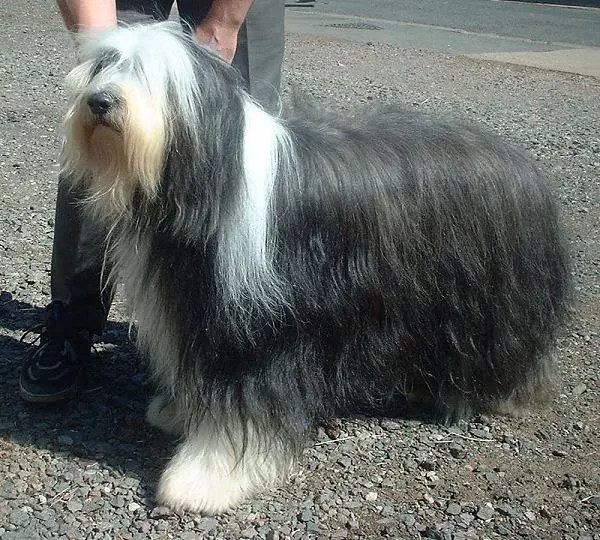
The Bearded Collie, Old English Sheepdog and Puli are other shaggy herding dogs. The Tibetan Terrier is another long-coated dog of similar size.