White Swiss Shepherd
A close white-coated cousin of the German Shepherd, the White Swiss Shepherd is gentle, intelligent and particularly well balanced in a family.
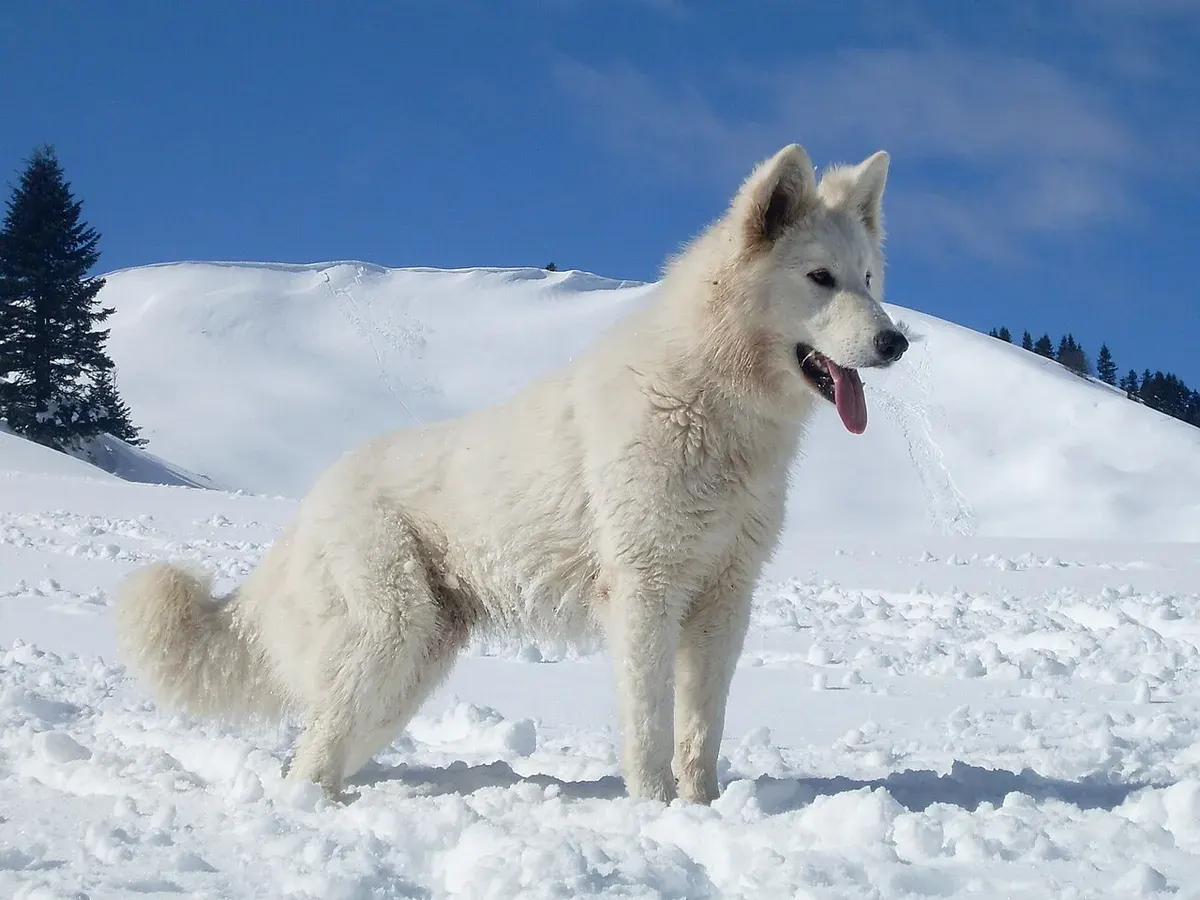
History and origins
The White Swiss Shepherd descends from white-coated German Shepherds, long excluded from breed standards in Europe but preserved in North America. Swiss breeders reimported and developed them from the 1970s.
The Fédération Cynologique Internationale recognised the breed in 2011, with Switzerland as its country of origin.
Temperament
Gentle, attentive and very attached to its family, the White Swiss Shepherd is usually less reactive than the German Shepherd. It is watchful without aggression and often excellent with children.
Sensitive, it learns easily with positive training and copes poorly with harshness or long periods alone.
Health
It is a fairly healthy breed, but hip and elbow dysplasia can occur, as in other shepherds of its size. Digestive problems and sensitivity to certain drugs have been reported in some individuals.
Ask for the parents' screening results and follow your veterinarian's advice.
This is general information. For any question about your dog's health, consult a veterinarian.
Feeding
Good-quality food designed for large, active dogs suits it. Puppies should grow steadily without excess weight.
Two meals a day are recommended.
Exercise
It needs one to two hours of daily activity: walks, ball games, obedience, tracking or agility.
It loves working with its owner and learning new exercises.
Walk it early in the morning and in the evening, and give it a cool, shady spot. A house with a garden suits it better than an apartment, although it can adapt to city life with plenty of outings.
Grooming
Its white double coat sheds heavily, especially during moults. Brushing two to three times a week is needed, and daily during the moult.
Despite its colour it gets less dirty than you might think, so keep baths rare.