A small, highly strung and tireless mountain herder, the Pyrenean Shepherd is quick, clever and devoted to its owner.
History and origins
The Pyrenean Shepherd has herded sheep in the Pyrenees for centuries, often alongside the large Pyrenean Mountain Dog, which did the guarding.
There are two varieties: long-haired and smooth-faced. It served as a messenger and search dog in the First World War.
Appearance and colours
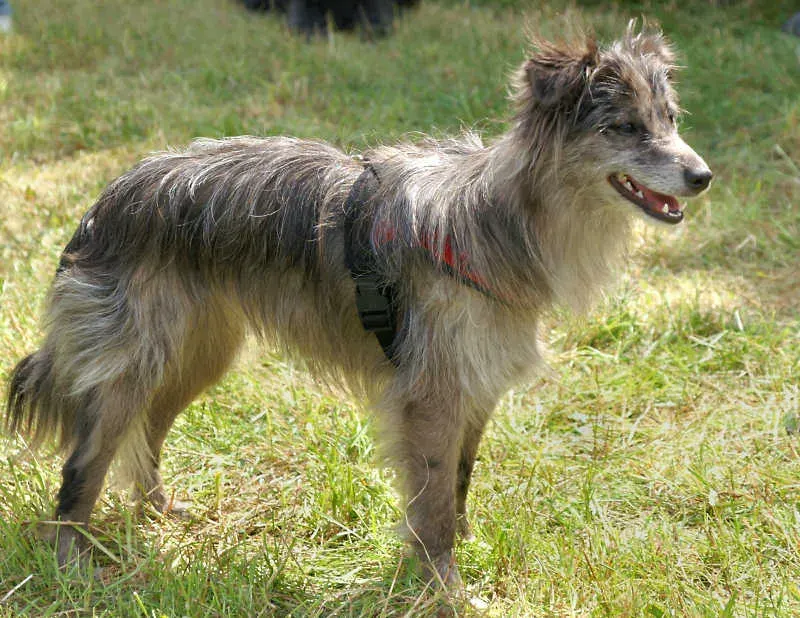
The FCI breed standard describes a dog showing a maximum of nervous energy in a minimum of size and weight, with an ever-alert, knowing look and great liveliness of movement. The coat is long or semi-long, always dense, almost flat or slightly wavy, with a texture between goat's hair and sheep's wool, sometimes forming cords on the croup.
The Royal Kennel Club lists the colours black, black and white, blue merle, brindle, fawn, grey and slate blue.
- Height at the withers: 42–48 cm for males, 40–46 cm for females (± 2 cm).
Temperament
Quick, sensitive and very reactive, the Pyrenean Shepherd is devoted to its owner and often wary of strangers. It barks readily.
Intelligent, it learns fast but needs early socialisation and gentle training so it does not become fearful.
With children and other pets
The standard describes a courageous, resourceful little dog, showing initiative and totally devoted to its owner; headstrong by nature, it usually needs firm guidance, and it is often wary of strangers. It rates 3 out of 5 with children and 3 out of 5 with other dogs in our ratings.
- It suits active owners who enjoy training.
- It rates 5 out of 5 for energy: it needs daily work and exercise.
Training tips
According to the standard, this sheepdog of the farms and pastures of the Pyrenees was almost unknown to the dog world until the early 20th century; its type varies from valley to valley, but its character does not. The first standard was written between 1921 and 1925. It rates 4 out of 5 for trainability in our ratings.
- Use varied, reward-based training and herding games.
- Socialise it early with visitors.
Health
This is a hardy, generally healthy breed. Hip dysplasia and some eye conditions can occur.
Regular veterinary check-ups are usually enough.
Common health issues in detail
The Royal Kennel Club recommends hip scoring as best practice for breeding dogs and notes that the breed has a breed club health scheme.
We found no large population study of health in the Pyrenean Shepherd.
This is general information. For any question about your dog's health, consult a veterinarian.
Feeding
Good-quality food suited to its small size and high activity works well.
Adjust the ration to its energy use.
Exercise
Very energetic, it needs at least an hour and a half of activity a day, with running and mental work. It excels at agility.
It is a dog for sporty owners.
On the plains, walk it during the cool hours in summer and provide shade and water. It suits a house with a garden and active owners better than an apartment.
Grooming
Its often slightly rustic coat needs weekly brushing. The long-haired variety can form natural cords.
Check ears and feet regularly.
Choosing a puppy
Choose a breeder who hip-scores the parents and takes part in the breed club health scheme.
- Ask for the parents' hip scores.
- Meet the mother: she should be lively and confident.
Our guide on how to recognise a responsible breeder explains what to ask.
Similar breeds
The Border Collie and Australian Shepherd are other energetic herders. The Catalan Sheepdog and Puli are other shaggy herding dogs.