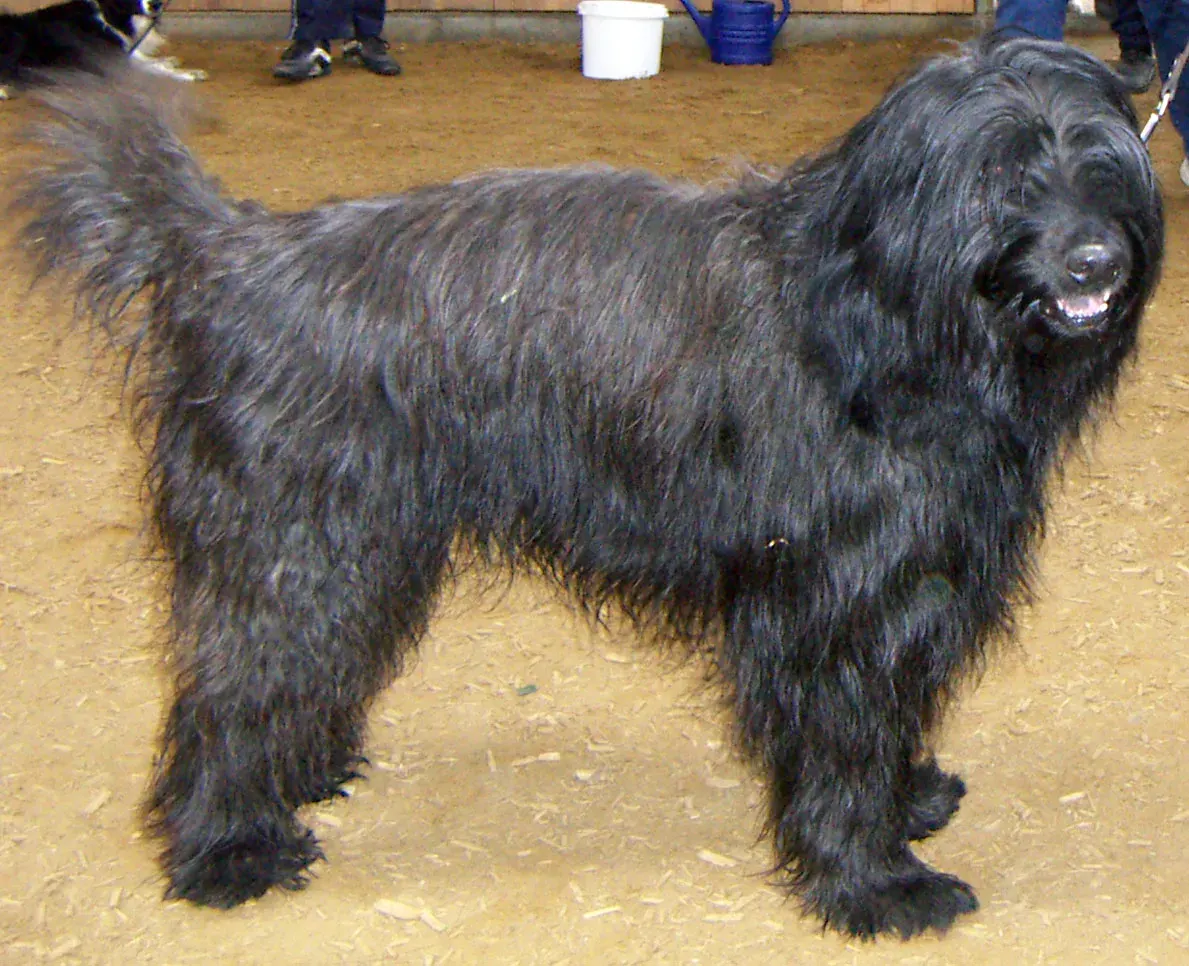
A Spanish herding dog with a long, shaggy coat, the Catalan Sheepdog is intelligent, balanced and very close to its family.
History and origins
The Catalan Sheepdog, or Gos d'Atura Català, has herded and guarded flocks in the Catalan Pyrenees and the plains of Catalonia for centuries.
It also served as a messenger dog during the Spanish Civil War and remains a valued farm dog in Spain.
Appearance and colours
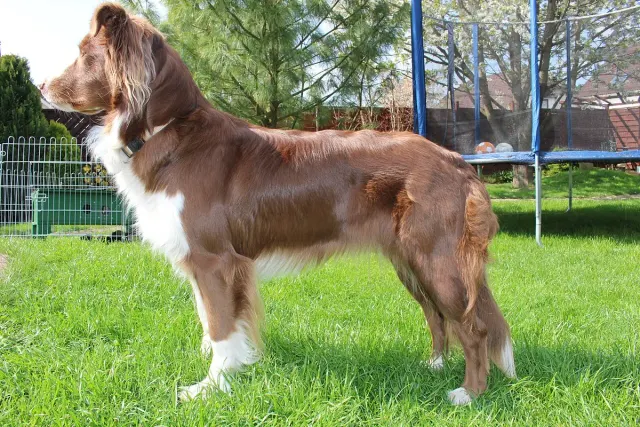
The FCI breed standard describes a well-balanced, medium-sized dog of medium proportions with a beautiful coat, slightly longer than tall (about 9:8). The long, flat or slightly wavy coat is rough, with abundant undercoat on the rear third of the body, and forms a beard, moustache, tuft and eyebrows that do not hide the eyes. The standard notes a typical moult in two stages: first the front half, giving the look of two half-dogs with different coats, then the rear.
From a distance the dog looks one colour, but up close the coat mixes hairs of different tones (fawn, reddish brown, grey, black and white). The resulting basic colours include shades of fawn and sable; the Royal Kennel Club lists black and tan, grey, fawn and sable.
- Height at the withers: 47–55 cm for males, 45–53 cm for females.
Temperament
Lively, attentive and affectionate, the Catalan Sheepdog is a good family companion, patient with children. It is watchful and reserved with strangers.
Intelligent and cooperative, it learns well with positive methods.
With children and other pets
The standard describes a very sedate, active and intelligent dog with a noble expression and a hardy, pleasant character, really devoted to its shepherd and flock and wary of strangers, which can make it seem unsociable. The Royal Kennel Club calls it active and amenable, popular as a herder and family companion. It rates 4 out of 5 with children and 4 out of 5 with other dogs in our ratings.
- It is devoted to its family and watchful with strangers.
- Socialise it early with visitors.
Training tips
According to the standard, the breed comes from the Catalan Pyrenees and spread to all the pastoral areas of Catalonia. Its true essence shows in driving flocks: it obeys the shepherd but also uses its initiative, moving the flock with ease. It is very vigilant and very resistant to heat, cold and bad weather. It rates 4 out of 5 for trainability in our ratings.
- Herding, obedience and agility suit it well.
- Give it daily exercise and work for its mind.
Health
This is a hardy breed with no major known problems. Hip dysplasia can occur.
Regular veterinary check-ups and a breeder who screens their dogs are still advisable.
Common health issues in detail
The Royal Kennel Club recommends eye testing and hip scoring as best practice for breeding dogs.
We found no large population study of health in the Catalan Sheepdog.
This is general information. For any question about your dog's health, consult a veterinarian.
Feeding
Good-quality food matched to its activity suits it.
Keep an eye on its weight under its thick coat.
Exercise
It needs at least an hour of daily activity, ideally varied: walks, games, obedience and agility.
It enjoys working with its owner.
In summer: outings during the cool hours, shade and water. It prefers a house with a garden to an apartment.
Grooming
Its long, shaggy coat needs thorough weekly brushing. It sheds in a distinctive way, in two stages (front half, then back half).
Keep the hair around the eyes trimmed back.
Choosing a puppy
Choose a breeder who eye-tests and hip-scores the parents.
- Ask for the parents' eye and hip results.
- Meet the mother: she should be calm and devoted.
- Ask how much grooming the coat needs, especially during the moult.
Our guide on how to recognise a responsible breeder explains what to ask.
Similar breeds
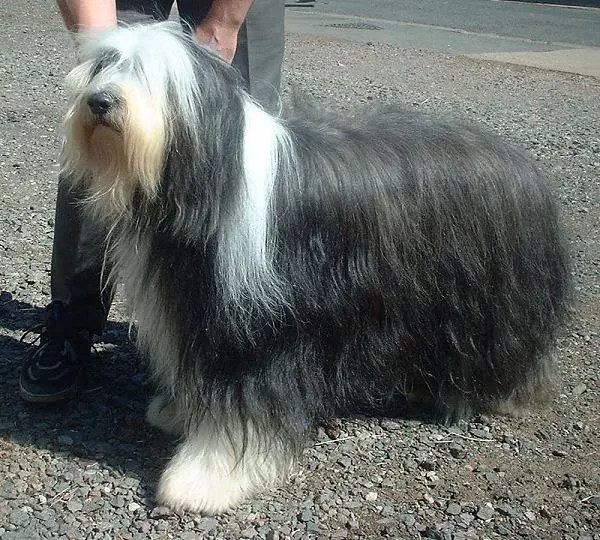
The Pyrenean Shepherd is another sheepdog from the Pyrenees. The Bearded Collie and Polish Lowland Sheepdog are other bearded, long-coated herding dogs. The Spanish Water Dog is another Spanish working breed.