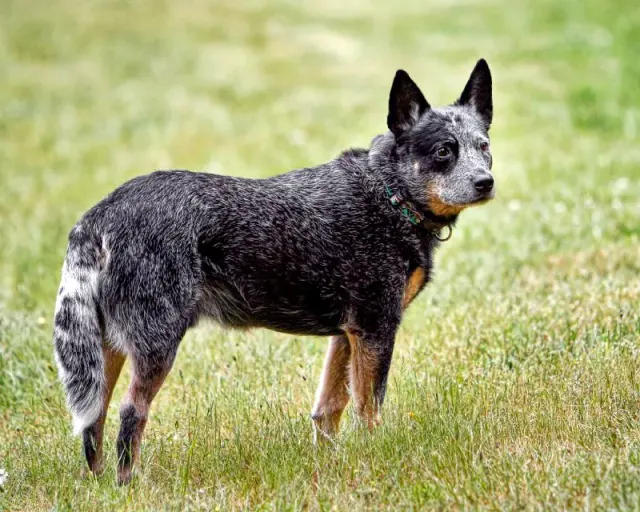
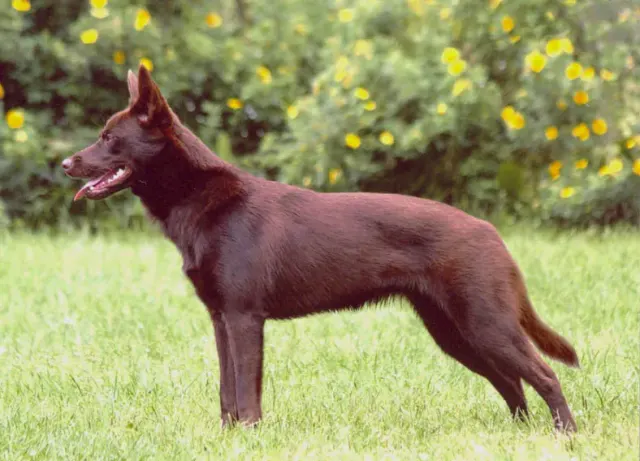
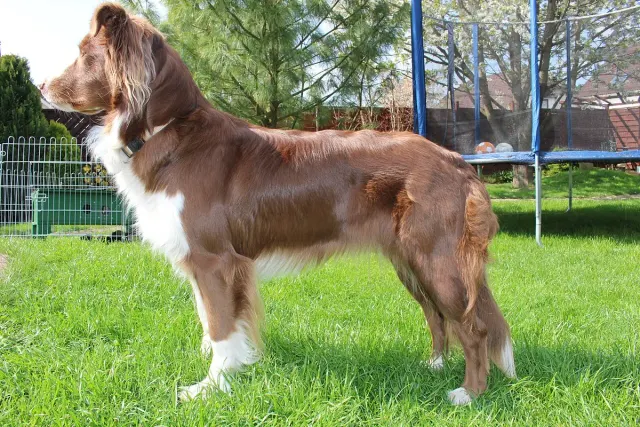
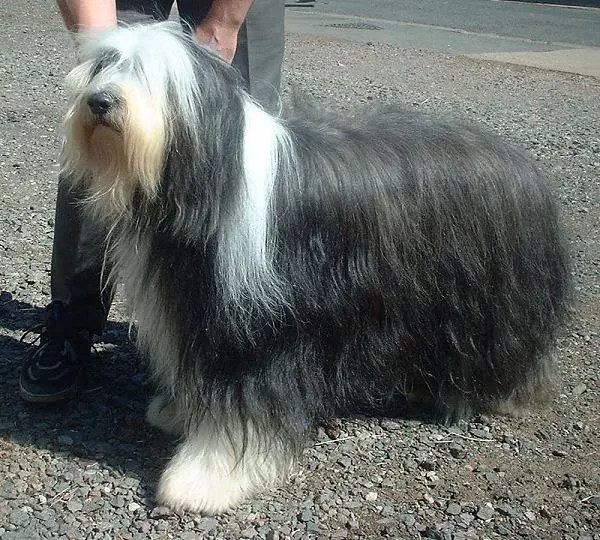
A small Hungarian herder with a corded coat, the Puli is lively, funny and very attached to its family.
History and origins
The Puli is an old Hungarian herding dog used to drive sheep on the plains, while the larger Komondor and Kuvasz handled guarding.
Its distinctive corded coat protected it from the weather.
Appearance and colours
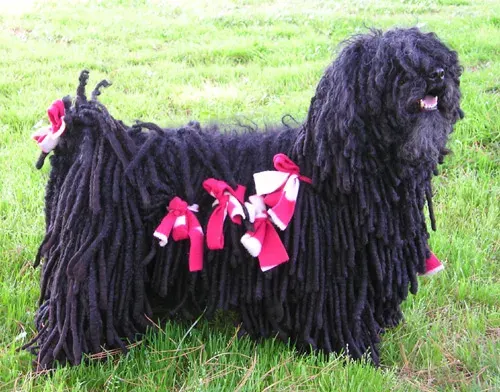
The FCI breed standard describes a medium-sized dog of strong constitution, square, with fine but not too light bones and a lean, well-muscled body, entirely covered by a strongly developed coat that tends to form curls and cords. The puppy coat is dense and wavy or curly, later forming tassels and cords.
The Royal Kennel Club lists the colours black, fawn, grey and white.
- Height at the withers: 39–45 cm for males (ideal 41–43 cm), 36–42 cm for females (ideal 38–40 cm).
- Weight: 13–15 kg for males, 10–13 kg for females.
Temperament
Energetic, playful and very watchful, the Puli is an excellent alarm dog. It is affectionate with its people and wary of strangers.
Intelligent but sometimes stubborn, it responds well to varied, positive training.
With children and other pets
The standard describes a dog of lively temperament, extremely able to learn, that loves children and is an excellent watchdog. It rates 3 out of 5 with children and 3 out of 5 with other dogs in our ratings.
- It is a lively, watchful family dog.
- Its corded coat needs a great deal of care (5 out of 5 for grooming needs in our ratings).
Training tips
According to the standard, the Puli is a Hungarian herding breed of Asian origin whose ancestors probably came to the Carpathian basin with the nomadic ancient Magyars. The Royal Kennel Club calls it a light and nimble flock herder. It rates 3 out of 5 for trainability in our ratings.
- It learns quickly with varied, reward-based training.
- Avoid exercise in the heat: it rates 2 out of 5 for heat tolerance.
Health
This is a fairly healthy breed. Hip dysplasia, some eye diseases and an inherited neurological condition have been reported.
Ask for the parents' screening and test results.
Common health issues in detail
The Royal Kennel Club recommends eye testing and hip scoring as best practice for breeding dogs.
We found no large population study of health in the Puli.
This is general information. For any question about your dog's health, consult a veterinarian.
Feeding
Good-quality food matched to its activity suits it. Its coat hides changes in weight.
Weigh it regularly.
Exercise
It needs about an hour of daily activity. It is agile and enjoys agility and obedience.
It loves puzzle games.
A short clip can be a sensible option in hot regions; walk it during the cool hours. Being medium-sized, it can live in an apartment if it gets enough exercise, though it barks readily.
Grooming
Its cords must be separated by hand regularly to prevent mats. Bathing and drying take a long time. Many owners choose to keep it in a short coat.
Keep the area under the tail and around the mouth clean.
Choosing a puppy
Choose a breeder who eye-tests and hip-scores the parents.
- Ask for the parents' eye and hip results.
- Meet the mother: she should be lively and friendly.
- Ask the breeder to show you how the cords are formed and cared for.
Our guide on how to recognise a responsible breeder explains what to ask.
Similar breeds
The Komondor is the other corded Hungarian breed. The Polish Lowland Sheepdog, Bearded Collie and Pyrenean Shepherd are other shaggy herding dogs.