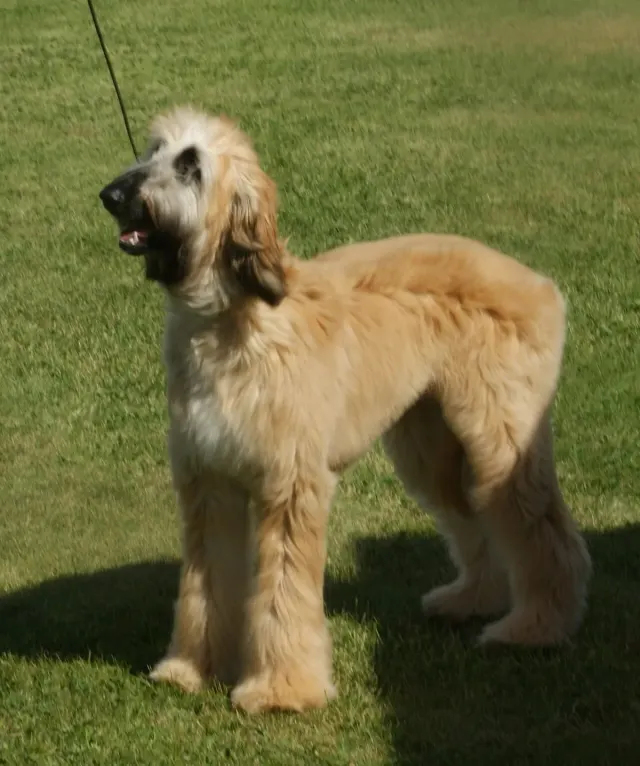
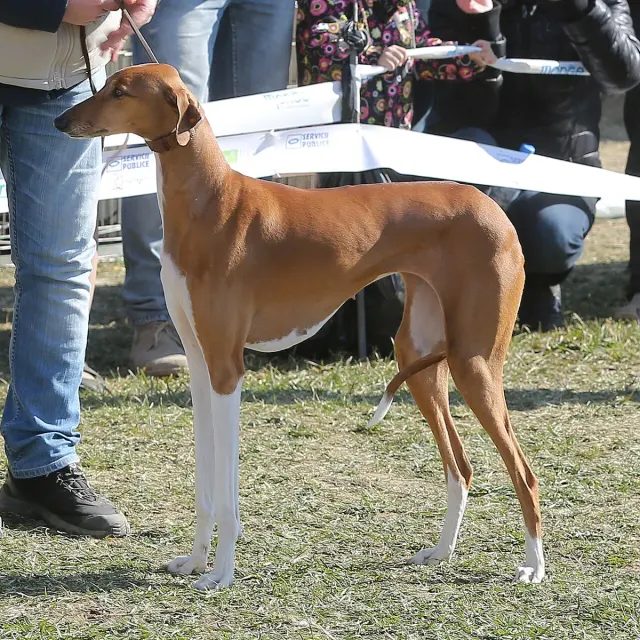
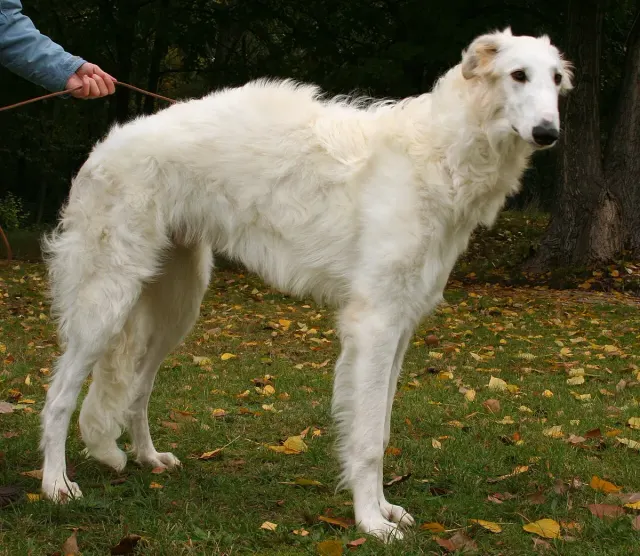
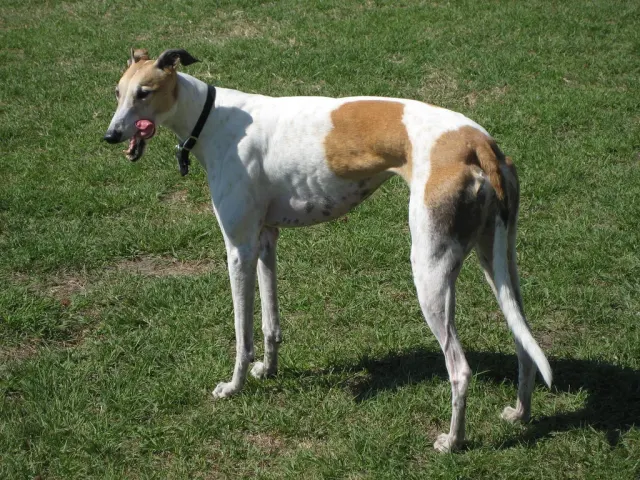
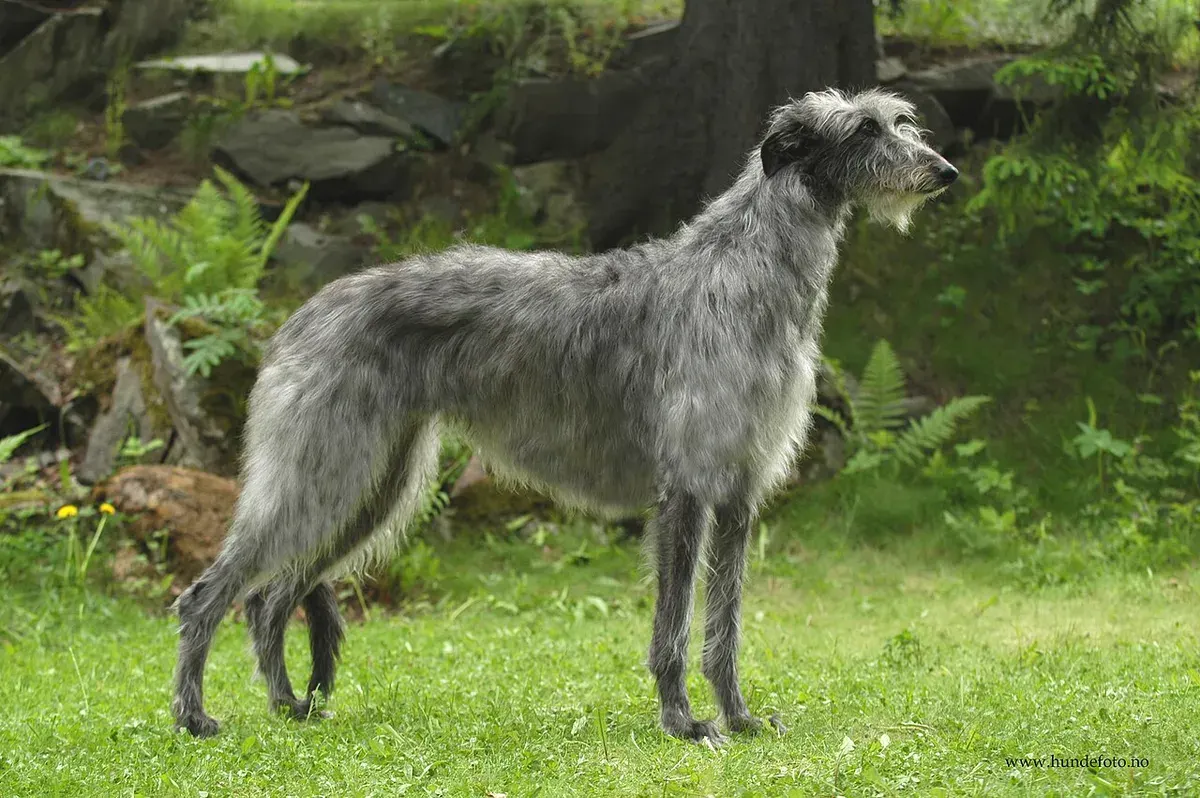
A tall, rough-coated Scottish sighthound with a gentle gaze, the Deerhound is calm, friendly and quiet at home.
History and origins
The Deerhound, or Scottish Deerhound, was used in the Highlands to course red deer by sight. Long reserved for the Scottish nobility, it nearly disappeared in the 19th century.
It remains an uncommon breed.
Appearance and colours
The FCI breed standard describes a dog that resembles a rough-coated greyhound of larger size and bone, built for speed, power and endurance. The coat is shaggy but not over-coated: thick, close-lying, ragged and harsh to the touch, about 8–10 cm long on the body, softer on the head, chest and belly.
Colours are dark blue-grey, darker and lighter greys, brindles and yellows, and sandy-red or red fawns with black points. A white chest, white toes and a slight white tail tip are permitted, but the less white the better.
- Minimum desirable height at the withers: 76 cm for males, 71 cm for females.
- Weight: about 45.5 kg for males, about 36.5 kg for females.
Temperament
Gentle, calm and friendly, the Deerhound is affectionate with its family and usually sociable with other dogs. It is not a guard dog.
Independent and sensitive, it responds to gentle training; its chase instinct is strong.
With children and other pets
The standard describes a gentle, friendly dog of quiet dignity: docile and good-tempered, never suspicious, aggressive or nervous. It rates 4 out of 5 with children and 4 out of 5 with other dogs in our ratings.
- It is a calm, gentle companion, but very large.
- Its sighthound instinct is strong: be careful with cats and small animals.
Training tips
According to the standard, the Deerhound, once called the Scottish Deerhound, has uncertain origins and has hunted the red deer for a thousand years; today it is more often seen in the show ring but has kept its type. The Royal Kennel Club calls it Scotland's ancient wolfhound, elegant and athletic. It rates 2 out of 5 for trainability in our ratings, although the standard calls it obedient and easy to train because it is eager to please.
- Let it run only in safe, fenced areas: it chases by sight.
- Keep sessions short and gentle.
Health
As a giant breed, it is prone to gastric torsion (bloat), heart disease and bone cancer. It is sensitive to anaesthetics.
Regular veterinary follow-up is recommended.
Common health issues in detail
Heart disease and bone cancer have both been studied in the breed. In a UK study of 99 Deerhounds, 21.6% were found to have preclinical dilated cardiomyopathy (DCM), a weakening of the heart muscle detected by ultrasound before any signs appear, and 13.6% had ventricular arrhythmias. A study of two Deerhound families found that osteosarcoma (bone cancer) is inherited: having an affected parent raised the risk to 38% in one family and 78% in the other.
The Royal Kennel Club notes that the breed has a breed club health scheme.
This is general information. For any question about your dog's health, consult a veterinarian.
Feeding
Large-breed food over two or three meals suits it; puppy growth should be supervised.
No exertion just before or after meals.
Exercise
It needs daily walks and free runs in a large enclosed area.
Indoors, it is calm and loves to rest.
It needs a house with a large enclosed garden rather than an apartment.
Grooming
Its harsh, shaggy coat needs weekly brushing.
Provide soft bedding for its joints.
Choosing a puppy
Choose a breeder who takes part in the breed club health scheme and can tell you about heart screening and cancer in the puppy's family.
- Ask whether the parents have had heart ultrasound screening.
- Ask about osteosarcoma in the parents and their relatives.
- Meet the mother: she should be gentle and calm.
Our guide on how to recognise a responsible breeder explains what to ask.
Similar breeds
The Irish Wolfhound is another giant rough-coated sighthound. The Greyhound, Borzoi and Saluki are other gentle sighthounds.