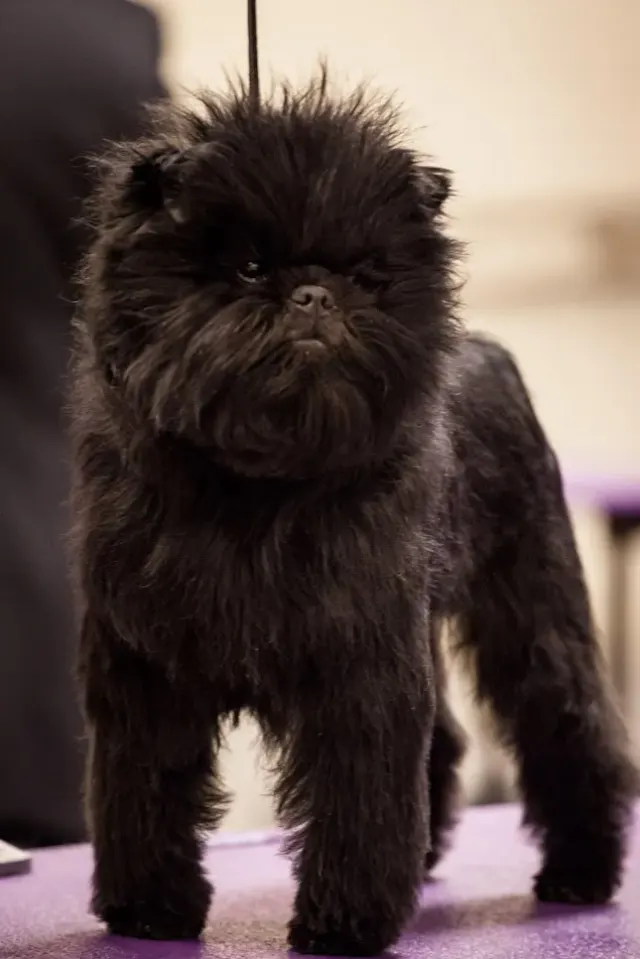
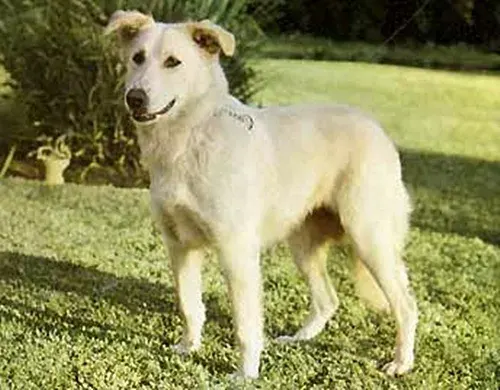
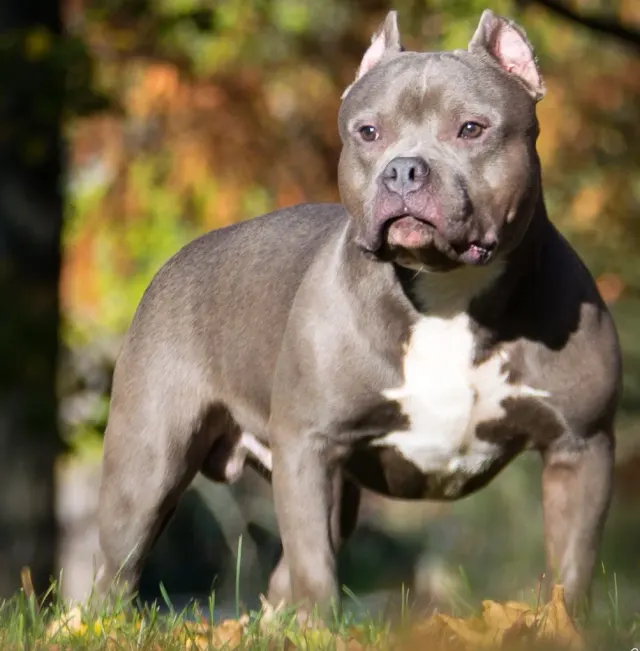
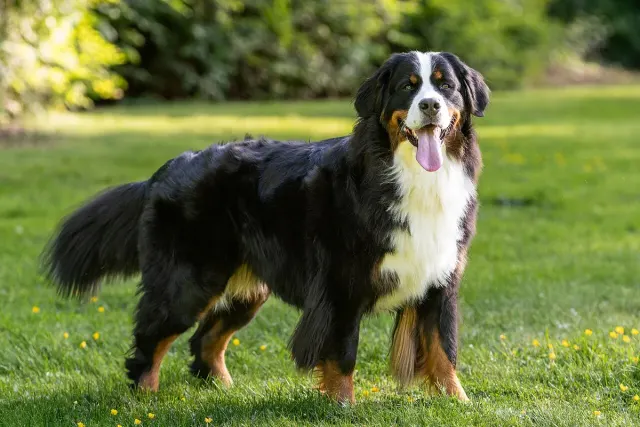
An elegant, versatile German guardian, the Hovawart is loyal, watchful and affectionate, with a strong personality.
History and origins
The Hovawart's name comes from old German for 'farm guardian'. Dogs of this type were described on Germanic farms in the Middle Ages.
The modern breed was rebuilt in the early 20th century from farm dogs and is recognised by the Fédération Cynologique Internationale.
Appearance and colours
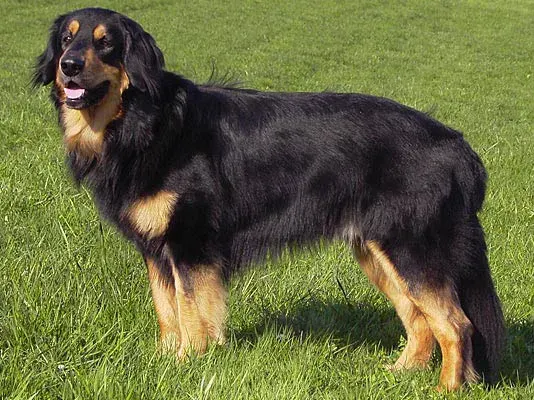
The FCI breed standard describes a powerful, medium-large, long-haired working dog, slightly longer than tall, with clearly visible differences between males and females in head and build. The coat is long, thick, slightly wavy and flat-lying, with little undercoat and feathering on the chest, belly, legs and tail.
The breed comes in three colours: black and tan (black with medium-blond markings), black, and blond.
- Height at the withers: 63–70 cm for males, 58–65 cm for females.
Temperament
Loyal, confident and watchful, the Hovawart is very attached to its family and naturally protective. It matures slowly and stays playful for a long time.
Intelligent but independent, it needs consistent, respectful training.
With children and other pets
The standard describes a good-natured, even-tempered dog with protectiveness, self-confidence and the ability to cope with stress; its special devotion to its family makes it, says the standard, an outstanding companion, watchdog, guard, rescue and tracking dog. It rates 4 out of 5 with children and 3 out of 5 with other dogs in our ratings.
- It is devoted to its family and a natural guard.
- It needs daily exercise and activity.
Training tips
According to the standard, the name comes from Middle High German for "farm guardian"; from 1922 the breed was rebuilt from farm dogs of similar type, with outcrosses including the German Shepherd, Newfoundland and Leonberger, and it was recognised as a breed in 1937 and as a working dog in 1964. The Royal Kennel Club calls it a loyal and self-confident guardian of the homestead. It rates 3 out of 5 for trainability in our ratings.
- Use calm, consistent, reward-based training.
- Avoid exercise in the heat: it rates 2 out of 5 for heat tolerance.
Health
This is a fairly robust breed. Breeders monitor hip dysplasia and hypothyroidism.
Ask for the parents' screening results.
Common health issues in detail
The FCI standard states that persistent selection against hip dysplasia since the 1960s has almost eliminated the disease from the breed. A Finnish study of 4,953 Hovawarts found that hypothyroidism, usually caused by an autoimmune thyroiditis, was the most common disease with a suspected genetic background; its heritability was moderate to high, so the authors advise breeders to report affected dogs and not to breed from them.
We found no large population study of overall health in the Hovawart.
This is general information. For any question about your dog's health, consult a veterinarian.
Feeding
Good-quality food matched to its activity suits it.
Two meals a day are recommended.
Exercise
It needs one to two hours of daily activity: walks, tracking, obedience and rescue work.
It enjoys working with its owner.
It needs a house with a garden and active owners.
Grooming
Its medium-length coat with little undercoat needs weekly brushing.
Check ears and paw pads regularly.
Choosing a puppy
Choose a breeder who hip-scores the parents and can tell you about thyroid disease in the puppy's family.
- Ask for the parents' hip scores.
- Ask whether the parents or relatives have had hypothyroidism.
- Meet the mother: she should be confident and good-natured.
Our guide on how to recognise a responsible breeder explains what to ask.
Similar breeds
The German Shepherd and Leonberger were among the breeds used to rebuild it. The Bernese Mountain Dog is another farm guardian, and the Flat-coated Retriever another long-coated black dog of similar size.