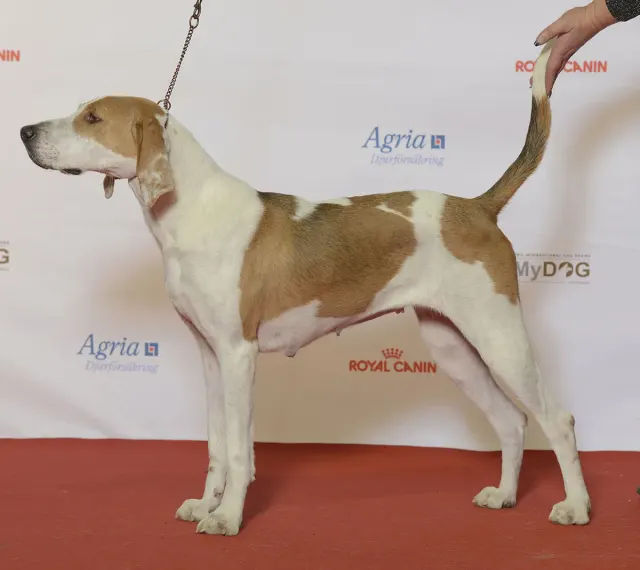
A hardy, sociable pack hound, the English Foxhound is built to run for hours. It suits very active owners in the countryside.
History and origins
The English Foxhound was bred in England from the 17th century for mounted fox hunting in packs.
Hunts kept very old breeding records, making it a remarkably uniform breed.
Appearance and colours
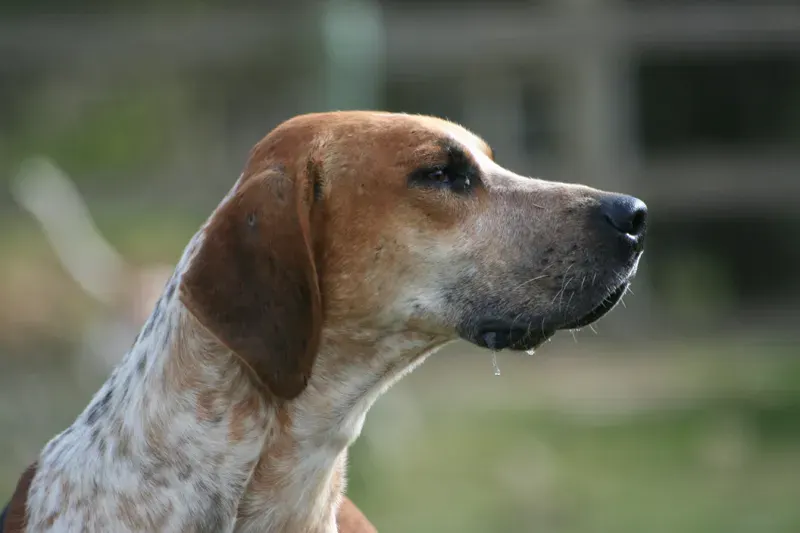
The FCI breed standard describes a well-balanced, powerful and clean-cut pack hound, with a flat skull, a long, square muzzle and great stamina. The coat is short, dense and weatherproof.
Any recognised hound colour and markings are accepted.
- Height at the withers: about 58–64 cm.
Temperament
Gentle, sociable and used to living in a group, the Foxhound gets on very well with other dogs. It is friendly with people but independent.
Its nose and stamina make it hard to recall. It has a powerful voice.
With children and other pets
The standard describes a friendly, non-aggressive dog with stamina, endurance and a natural ability to hunt. It rates 4 out of 5 with children and 5 out of 5 with other dogs in our ratings.
- Bred to live and work in a pack, it usually enjoys the company of other dogs.
- It is a very active dog that needs space and long daily exercise.
Training tips
According to the standard, the English Foxhound has been carefully bred for over two hundred years, and the stud books of the Masters of Foxhounds Association go back to before 1800, so pedigrees can be traced far back. The FCI classifies it as a pack hound for mounted hunting. It rates 2 out of 5 for trainability in our ratings.
- Keep it on a lead or in safe, fenced areas: it follows scent.
- It rates 5 out of 5 for energy: plan long walks every day.
Health
This is a robust breed with few inherited problems. Hip dysplasia can occur.
Regular veterinary follow-up is recommended.
This is general information. For any question about your dog's health, consult a veterinarian.
Feeding
Food suited to high activity levels works well.
Avoid excess weight if activity drops.
Exercise
It needs several hours of activity a day: long runs, hiking and tracking.
It is unsuited to a sedentary life.
It copes reasonably with moderate heat thanks to its short coat, but its stamina exposes it to heatstroke: in summer, activity only during the cool hours. It only suits country life with plenty of space, ideally with another dog.
Grooming
Its short coat needs weekly brushing.
Check its ears and feet after outings.
Choosing a puppy
The FCI standard says only healthy dogs with typical breed conformation should be used for breeding.
- Ask what health checks the parents have had.
- Meet the mother: she should be friendly and calm.
- Make sure you can meet its exercise needs.
Our guide on how to recognise a responsible breeder explains what to ask.
Similar breeds
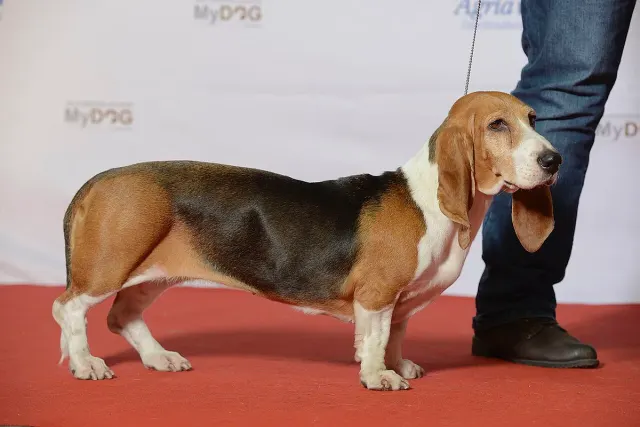
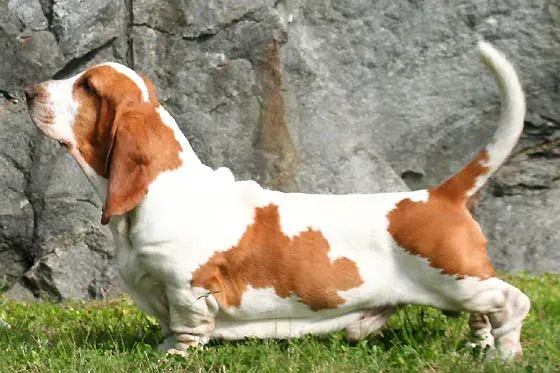
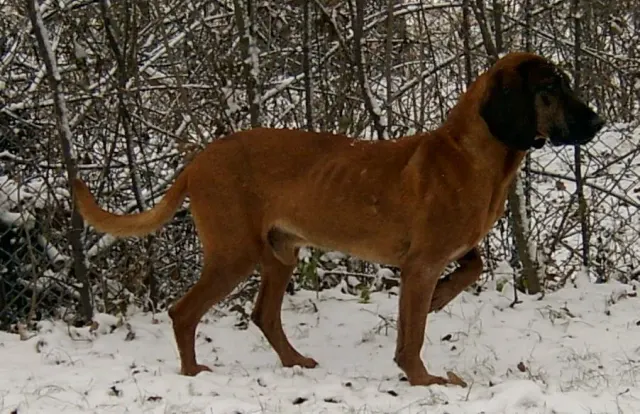
The American Foxhound is its American relative, and the Beagle a smaller pack hound. The Grand Bleu de Gascogne and Porcelaine are other large French scenthounds.