Cheerful, sociable and led by its nose, the Beagle is an excellent family dog, but training takes patience.
History and origins
The Beagle is a small British scent hound used for centuries to hunt hare in packs, often followed on foot.
Its easy-going nature and exceptional nose have also made it a detection dog at airports.
Appearance and colours
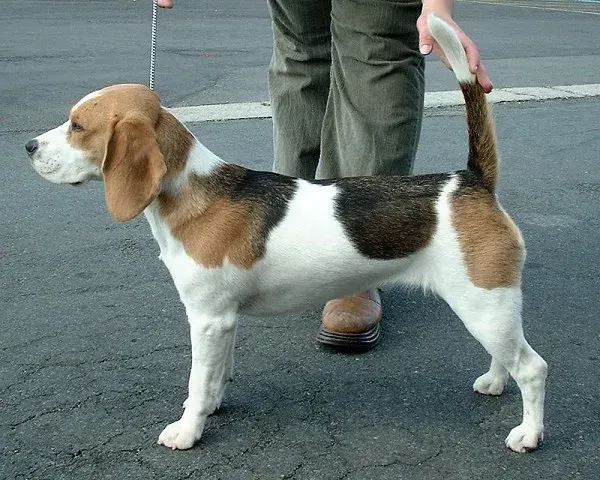
The FCI breed standard describes a sturdy, compactly built hound that conveys quality without coarseness. The height to the elbow is about half the height at the withers. The Royal Kennel Club calls it the smallest of the British pack hounds.
The coat is short, dense and weatherproof. Accepted colours are tricolour (black, tan and white); blue, white and tan; badger pied; hare pied; lemon pied; lemon and white; red and white; tan and white; black and white; and all white. All of them except all white may be mottled. The tip of the tail is always white.
- Height at the withers: 33–40 cm.
- In a UK study of almost 20,000 Beagles, the median adult weight was about 18 kg.
Temperament
Cheerful, gentle and very sociable, the Beagle loves children and other dogs. As a pack dog, it copes poorly with being alone and may howl.
Its nose rules its life: recall is often unreliable and it can be stubborn. Patient, reward-based training is essential.
With children and other pets
The standard calls the Beagle merry, amiable and alert, showing no aggression or timidity, and the Royal Kennel Club notes that, bred to work in packs, it is sociable and thrives on companionship. It rates 5 out of 5 with children and with other dogs in our ratings.
- A Beagle will raid lunch boxes and bins: teach children to keep food out of reach and to close doors and gates.
- It usually loves the company of other dogs, which can help when the family is out.
- Small pets need careful, supervised introductions, because it is a hunting hound.
Training tips
The standard describes a bold, determined hound whose essential function is to follow a scent. Its nose often wins over your voice, and it rates 2 out of 5 for trainability in our ratings.
- Use high-value food rewards and train in short, frequent sessions.
- Practise recall on a long line in safe places, and only let it off lead in securely fenced areas.
- Channel the nose: scent games, tracking and searching for hidden food are the most satisfying work for a Beagle.
- Teach it to settle and to stay alone gradually, to limit howling.
Health
This is a fairly robust breed. Epilepsy, hypothyroidism, disc herniation, ear infections and obesity should be monitored.
Regular veterinary follow-up is recommended.
Common health issues in detail
In a UK study of 3,729 Beagles under veterinary care in 2019, the most common disorders were obesity (24%), periodontal (gum) disease (18%), overgrown nails (12%), ear infections (otitis externa, 11%) and anal sac impaction (11%). The median age at death was 11.3 years, and cancer was the most common cause of death. The researchers concluded that the Beagle does not have an extreme conformation, and that owners and vets should focus on weight control and dental care.
Weight and teeth. With almost one Beagle in four recorded as obese, weighing food and counting treats is the most useful habit for the breed. Brush its teeth regularly and ask your vet to check its mouth at every visit.
Health tests. The Royal Kennel Club recommends DNA tests for breeding dogs:
- Lafora disease, a late-onset form of epilepsy, and neonatal cerebellar cortical degeneration (NCCD) (minimum)
- factor VII deficiency, a bleeding disorder; Imerslund-Gräsbeck syndrome (IGS-2), which affects vitamin B12 absorption; and Musladin-Lueke syndrome (MLS), which affects the skin and joints (best practice)
This is general information. For any question about your dog's health, consult a veterinarian.
Feeding
Very greedy, the Beagle steals food and gains weight easily. Measure portions and keep food out of reach.
Use part of its ration as training rewards.
Exercise
It needs at least an hour of daily activity, with scent games and varied walks.
Keep it on a lead or in an enclosed area: it will follow a trail without looking back.
It can live in an apartment if it gets enough exercise. Beware: its howling when you are out may disturb neighbours in apartment buildings.
Grooming
Its short coat needs weekly brushing. Clean its drop ears regularly.
It sheds all year round.
Choosing a puppy
Choose a breeder who DNA tests both parents for the conditions listed above and shows you the results, raises the litter in the home and lets you meet the mother.
- Ask for the parents' DNA test results and check the names against their registration documents.
- Look at the parents' body condition: lean, fit parents show a breeder who takes weight seriously.
- Meet the mother: she should be friendly, relaxed and curious, in keeping with the breed's merry temperament.
- Think honestly about your garden fence and your neighbours: a Beagle that is bored or alone may dig, escape or bay.
- Consider an adult Beagle from a rescue, whose temperament and habits are already known.
Our guide on how to recognise a responsible breeder lists the questions to ask.
Similar breeds
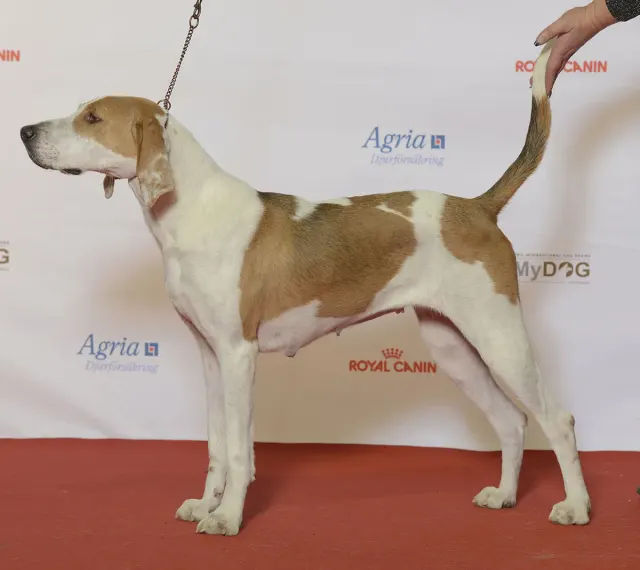
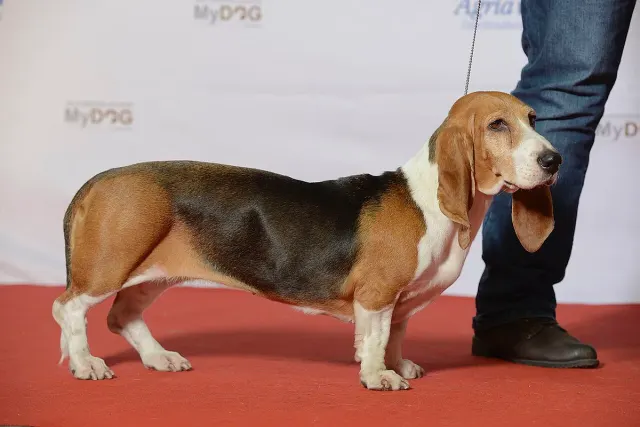
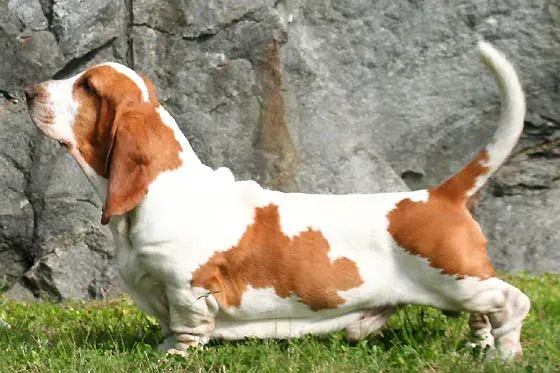
The English Foxhound is the larger pack hound from which the Beagle was bred down. The Basset Hound is a heavier, short-legged scent hound. The Petit Basset Griffon Vendéen is a rough-coated French scent hound.