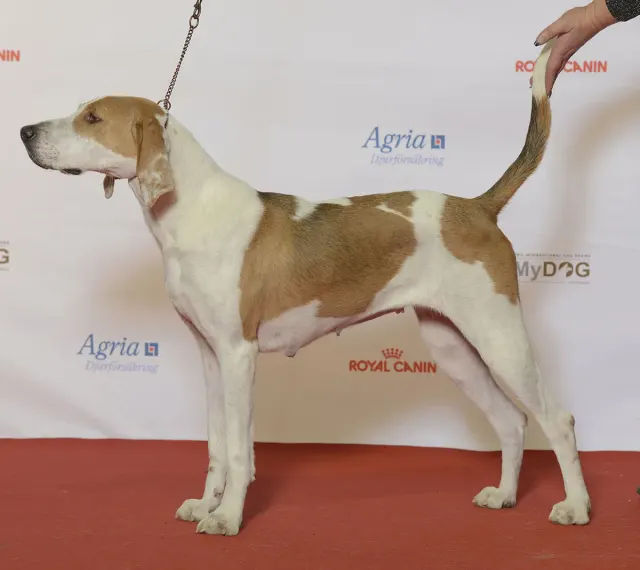
Lighter than its Hanoverian cousin, the Bavarian Mountain Scent Hound is an agile, calm mountain tracker devoted to its owner.
History and origins
The Bavarian Mountain Scent Hound was developed in 19th-century southern Germany by crossing the Hanoverian Scenthound with mountain hounds, to track wounded game on steep terrain.
It remains first and foremost a working dog for hunters.
Appearance and colours
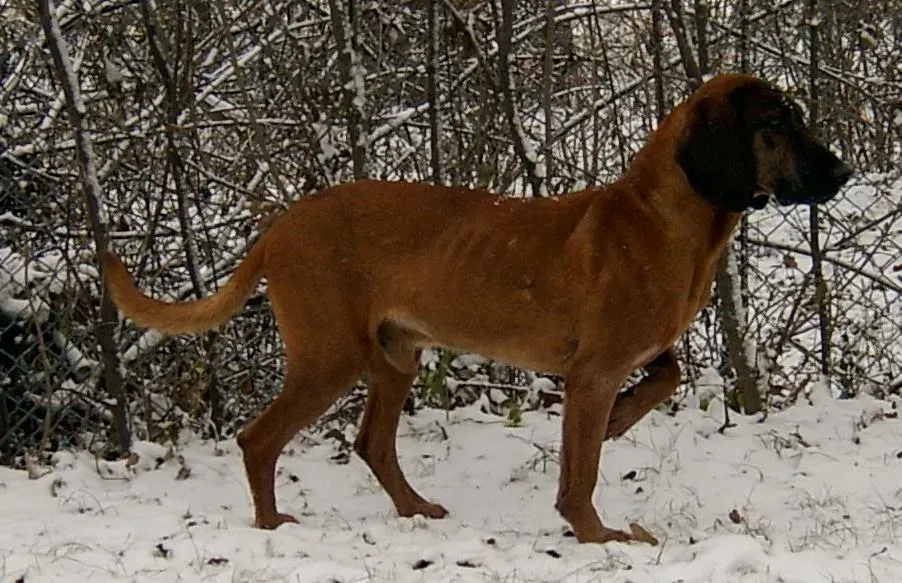
The FCI breed standard describes a balanced, rather light, very mobile and muscular medium-sized dog, slightly longer than tall and slightly higher at the rear, on legs that are not too long. The Royal Kennel Club calls it agile and athletic, designed to work on steep mountain slopes.
The coat is dense, close-fitting and moderately harsh with little gloss, harsher and longer on the belly, legs and tail. Colours range from deep red, deer red and reddish brown to tan, fawn and biscuit, or reddish grey like a deer's winter coat, sometimes brindled or with black hairs; the muzzle and ears are dark. A small light patch on the chest, the "Bracken star", is allowed.
- Height at the withers: 47–52 cm for males, 44–48 cm for females.
- Ideal weight: 20–30 kg for males, 17–25 kg for females.
Temperament
Calm, balanced and very attached to its handler, it is reserved with strangers. At work it is persistent and focused.
It needs regular tracking activities and consistent training.
With children and other pets
The standard describes a calm, balanced dog, devoted to its owner and reserved with strangers: self-assured, unafraid and biddable, neither shy nor aggressive. It rates 3 out of 5 with children and 3 out of 5 with other dogs in our ratings.
- It is usually quiet at home when its needs are met.
- It bonds closely with its owner and may be reserved with visitors.
Training tips
The standard explains that the breed belongs to the leash hounds descended from the old "Bracken" hunting dogs, chosen for their reliable nose and calm temperament, and that it is a specialist in tracking wounded hoofed game. It rates 3 out of 5 for trainability in our ratings.
- It needs regular, demanding scent work: tracking and trailing suit it best.
- Plenty of exercise on varied terrain keeps it fit and content.
Health
This is a robust breed. Breeders monitor hip dysplasia.
Regular veterinary follow-up is recommended.
Leishmaniasis prevention is important for hunting dogs.
Common health issues in detail
The Royal Kennel Club recommends hip scoring as best practice for breeding dogs.
We found no large population study of health in the breed.
This is general information. For any question about your dog's health, consult a veterinarian.
Feeding
Food matched to its activity suits it.
Avoid excess weight.
Exercise
It needs long outings in nature and tracking work.
It is not made for a sedentary city life.
It mainly suits hunters living in rural areas.
Grooming
Its short, dense coat needs weekly brushing.
Check its ears and look for ticks after outings.
Choosing a puppy
The Bavarian Mountain Scent Hound is a working breed, often bred for hunters. Choose a breeder who hip-scores the parents and can tell you whether the puppy will suit a family or a working home.
- Ask what work the parents do and how much exercise they get.
- Meet the mother: she should be calm and self-assured.
Our guide on how to recognise a responsible breeder explains what to ask.
Similar breeds
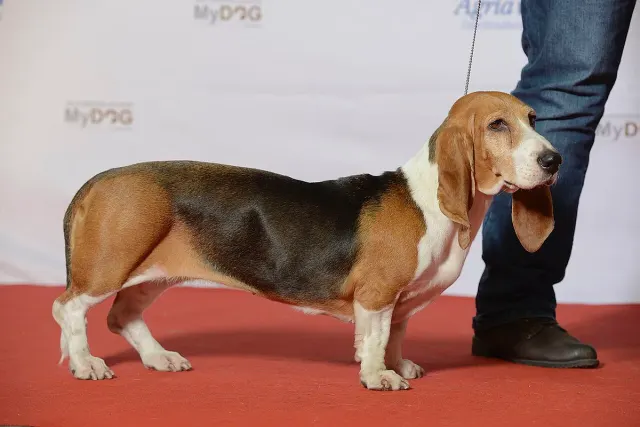
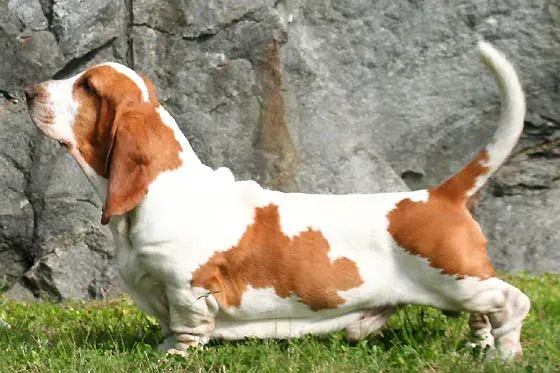
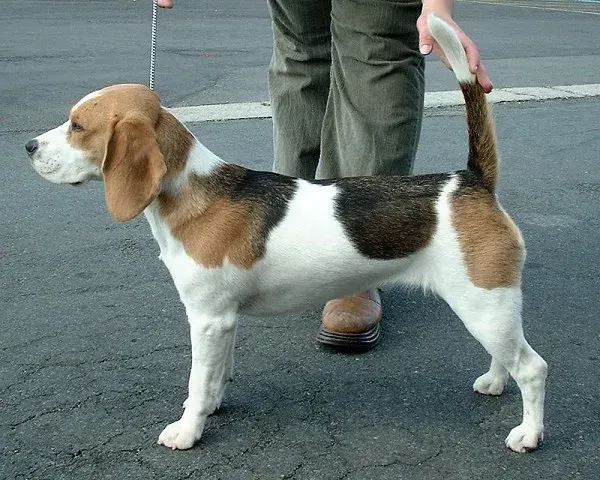
The Hanoverian Scenthound is the larger German leash hound for tracking wounded game. The Bloodhound is the best-known tracking hound. The Beagle is a smaller scent hound. The German Shorthaired Pointer is another German hunting dog of similar size.