Dalmatian
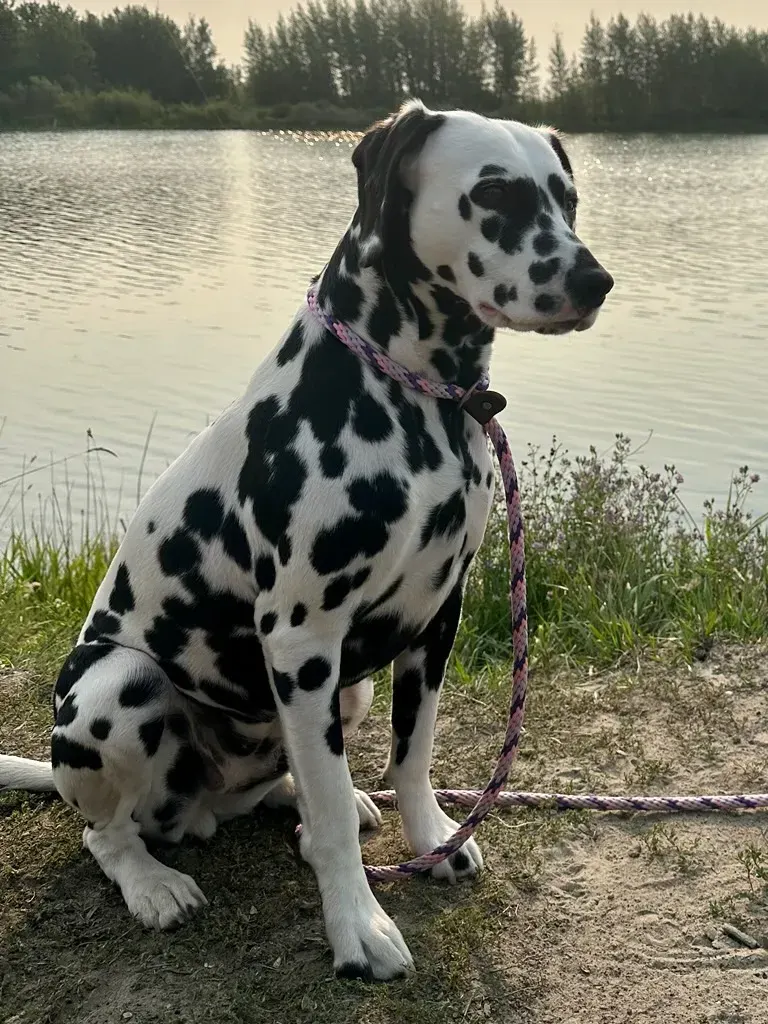
Famous for its white coat with black or liver spots, the Dalmatian is a tireless, cheerful athlete deeply attached to its family.
History and origins
The Dalmatian is named after Dalmatia on the Croatian coast, recognised as its country of origin by the Fédération Cynologique Internationale. It became famous in England as a carriage dog, running alongside horses over long distances.
The film '101 Dalmatians' made it very popular.
Temperament
Cheerful, energetic and affectionate, the Dalmatian loves to join in all family activities. It can be reserved with strangers.
It needs consistent training and a real daily physical outlet.
Health
Congenital deafness is common in the breed, so a hearing test for puppies is recommended. Dalmatians are also predisposed to urinary stones (urate) and skin allergies.
Regular veterinary follow-up is important.
This is general information. For any question about your dog's health, consult a veterinarian.
Feeding
A suitable diet, low in purines if your veterinarian advises it, helps prevent urinary stones. Fresh water should be plentiful.
Avoid excess weight.
Exercise
It needs at least one to two hours of daily activity: running, trotting beside a bike, canicross and games.
It is a dog for sporty owners.
The Dalmatian copes fairly well with heat thanks to its short coat, but its pale skin is sun-sensitive and its energy exposes it to heatstroke. In summer, walk it early or late, with plenty of water. It needs a house with a garden and active owners.
Grooming
Its short coat needs weekly brushing, but it sheds heavily all year round.
A rubber grooming mitt helps limit hair in the house.