Bloodhound
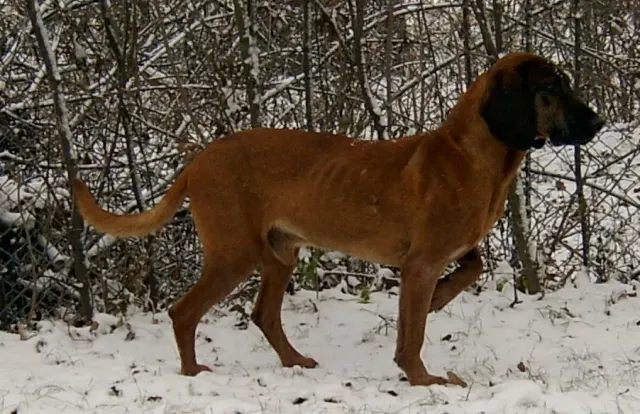
With the most famous nose in the dog world, the Bloodhound is a gentle, patient and determined tracker with heavily wrinkled skin.
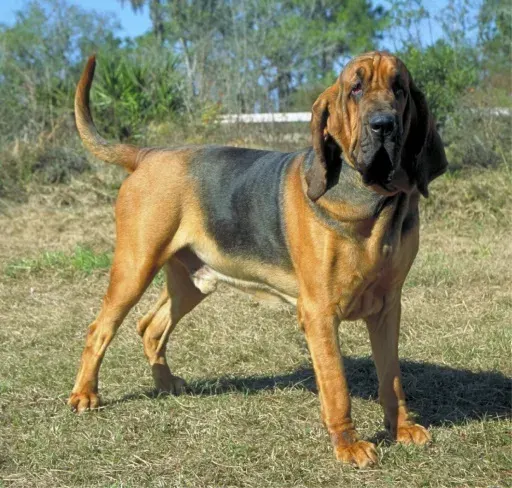
History and origins
The Bloodhound, known in French as the 'Chien de Saint-Hubert', takes that name from the Abbey of Saint-Hubert in the Belgian Ardennes, where monks bred it in the Middle Ages. It was later developed in England as the Bloodhound.
Its exceptional nose makes it a man-trailing dog used by police.
Temperament
Gentle, affectionate and patient, the Bloodhound is usually good with children and other dogs. Once on a trail, it becomes deaf to any recall.
Stubborn, it needs patient training with plenty of scent games.
Health
Bloat is a major risk in the breed. Eyelid problems (entropion, ectropion), ear infections, skin-fold infections and dysplasia are also common.
Regular veterinary follow-up is essential.
This is general information. For any question about your dog's health, consult a veterinarian.
Feeding
Split the ration into two or three meals and enforce rest after each one to reduce the risk of bloat.
Avoid excess weight.
Exercise
It needs long daily walks and tracking activities, always on a long line or in an enclosed area.
It can follow a trail for miles.
It needs a house with a large fenced garden; it is poorly suited to apartments.
Grooming
Its short coat needs weekly brushing, but its ears, folds and jowls must be cleaned very regularly. It drools a lot.
Keep an eye on its eyes.