A large, long-eared American scent hound, the Black and Tan Coonhound is gentle and sociable, with a remarkable nose and voice.
History and origins
The Black and Tan Coonhound was developed in the United States, especially in the Appalachians, from Bloodhounds and Foxhounds to hunt raccoons at night.
It follows the trail on the ground, then bays at the foot of the tree where the animal has taken refuge.
Appearance and colours
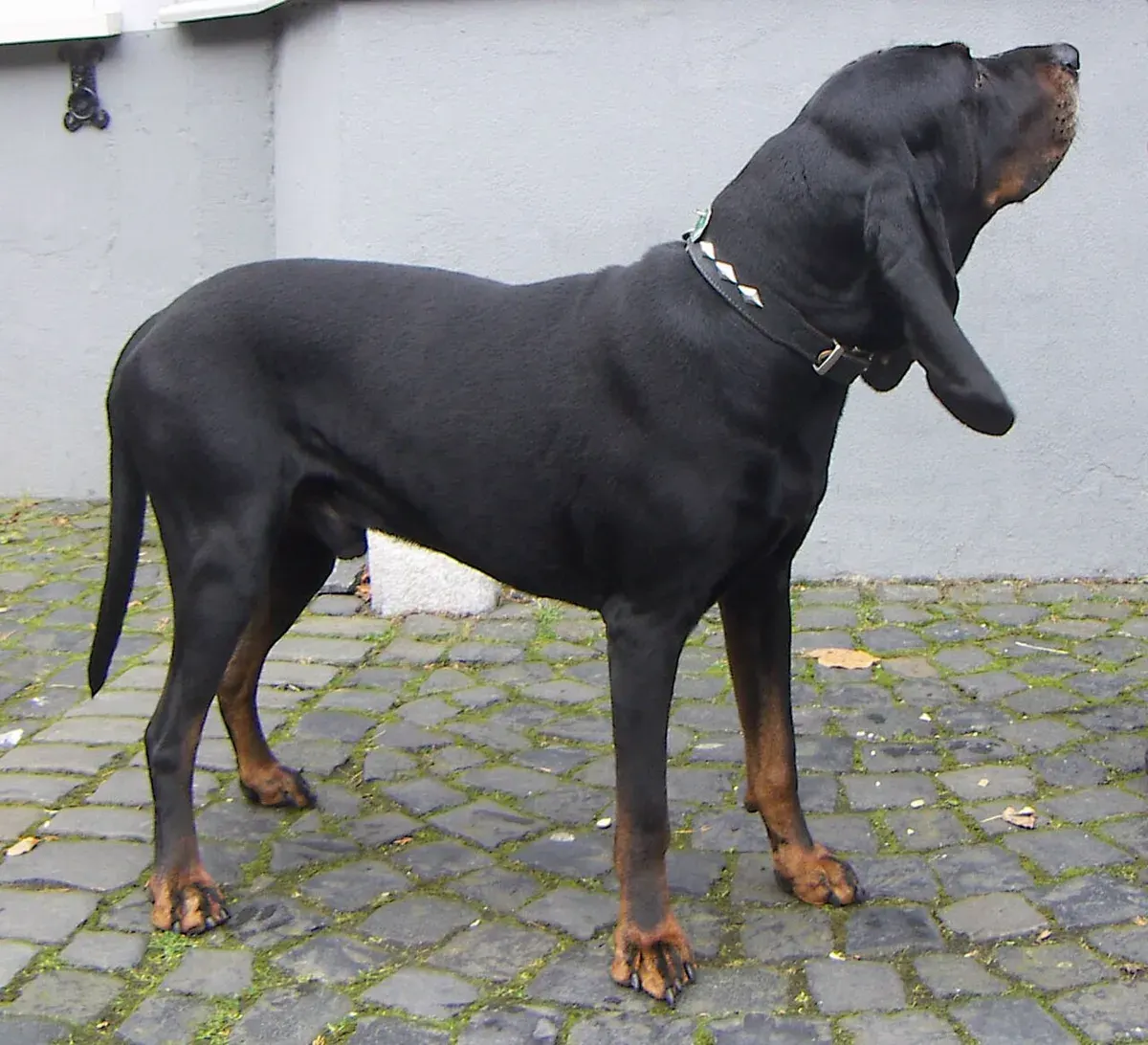
The FCI breed standard describes first and foremost a working dog, a trail and tree hound able to withstand winter cold, summer heat and difficult terrain, giving an impression of power, agility and alertness. The body is as long as or slightly longer than the dog is tall.
The coat is short but dense, to withstand rough going. As the name says, the colour is coal black with rich tan markings above the eyes, on the sides of the muzzle, chest, legs and breeches, with black "pencil" markings on the toes.
- Height at the shoulder: 63.5–68.5 cm for males, 58–63.5 cm for females.
Temperament
Gentle, calm indoors and very sociable, the Coonhound is usually good with children and other dogs. Outdoors, its nose is in charge.
It can be stubborn and has a very powerful voice.
With children and other pets
The standard asks for an even temperament, outgoing and friendly; some dogs may be reserved but never shy or vicious, and aggression towards people or other dogs is most undesirable. It rates 4 out of 5 with children and 4 out of 5 with other dogs in our ratings.
- As a pack hound that works in close contact with other hounds, it usually enjoys canine company.
- Its voice is powerful: think of the neighbours.
Training tips
The standard explains that the breed is used mainly to trail raccoons and "tree" them, hunting entirely by scent, and that it is also proficient on deer, bear, mountain lion and other big game. The Royal Kennel Club calls it the raccoon hunter of North America. It rates 2 out of 5 for trainability in our ratings.
- Use a long line or secure area: once on a scent, it may not come back.
- Tracking and scent games give it the work it was bred for.
Health
This is a fairly robust breed. Hip dysplasia, ear infections and a rare nerve condition linked to contact with raccoons in its home country should be monitored.
Regular veterinary follow-up is recommended.
Common health issues in detail
The Royal Kennel Club recommends hip scoring and elbow grading for breeding dogs as a minimum, and eye testing as best practice.
We found no large population study of health in the breed.
This is general information. For any question about your dog's health, consult a veterinarian.
Feeding
Food matched to its activity suits it.
Avoid excess weight.
Exercise
It needs one to two hours of daily activity, with tracking games.
Keep it on a lead or in an enclosed area.
Its short coat helps with moderate heat, but its size means it should be walked during the cool hours in summer. It needs a house with a garden, away from noise-sensitive neighbours.
Grooming
Its short coat needs weekly brushing. Clean its long ears often.
It drools a little.
Choosing a puppy
Choose a breeder who hip-scores, elbow-grades and eye-tests the parents.
- Ask for the parents' hip, elbow and eye results.
- Meet the mother: she should be outgoing and friendly, never shy.
Our guide on how to recognise a responsible breeder explains what to ask.
Similar breeds
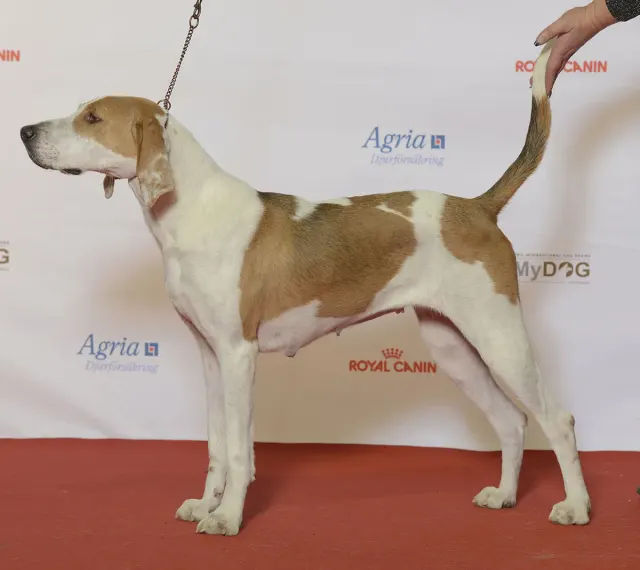
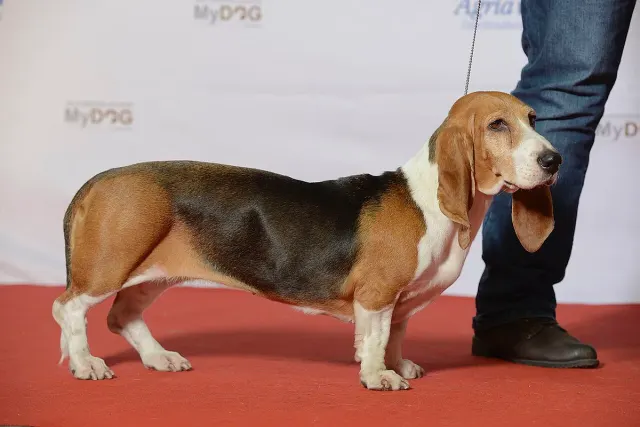
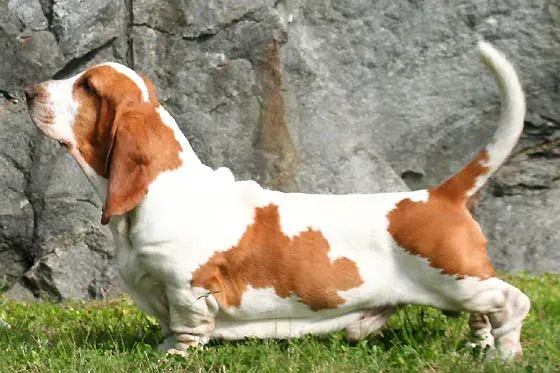
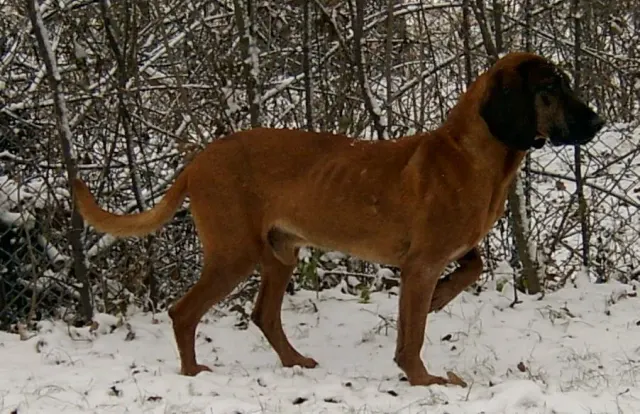
The Bloodhound is a large scent hound of similar colouring. The American Foxhound and English Foxhound are other large pack hounds. The Bavarian Mountain Scent Hound is a specialist tracking hound.