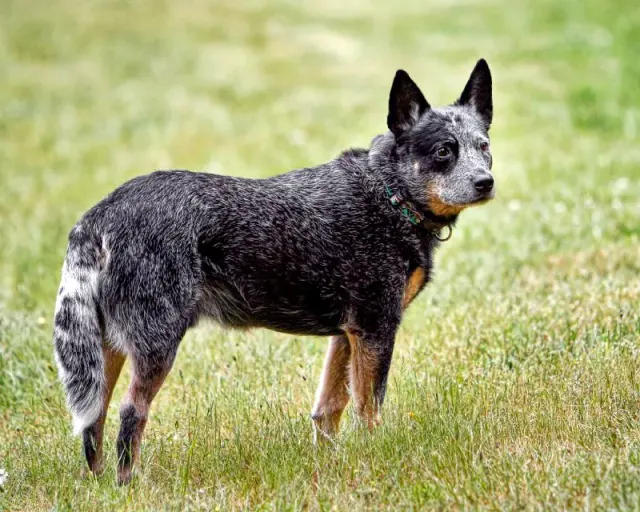
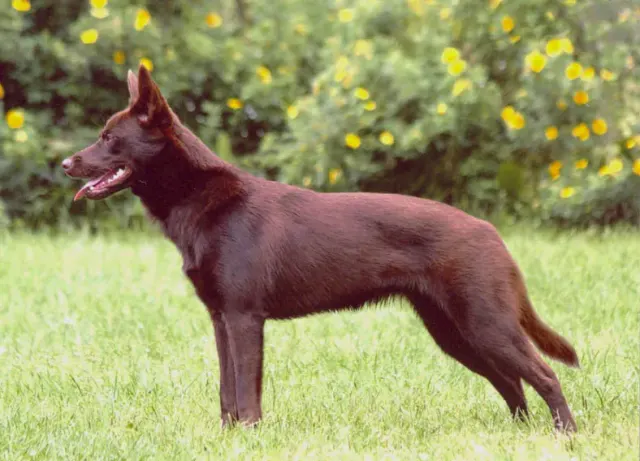
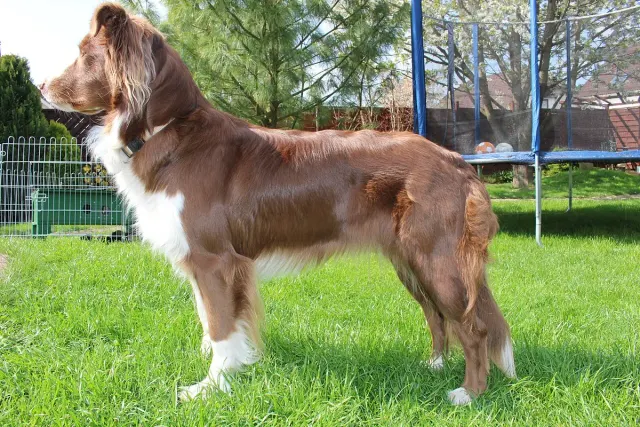
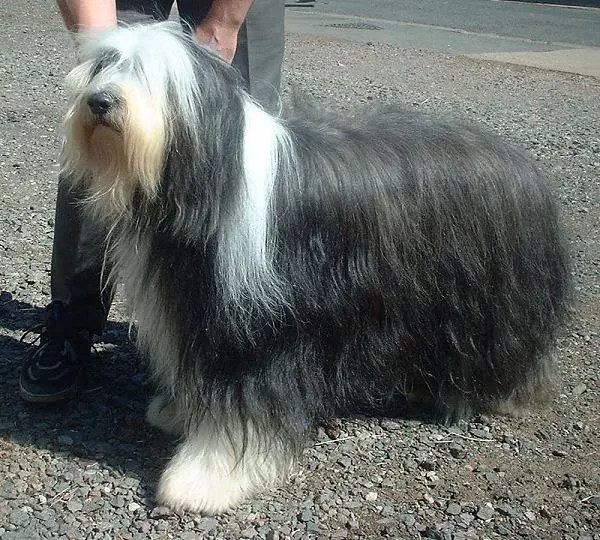
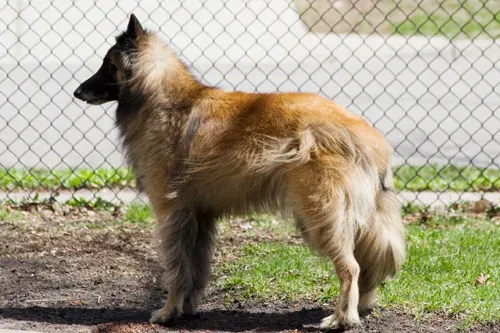
A long-haired, fawn Belgian Shepherd with black-tipped coat, the Tervuren combines elegance, intelligence and energy. It thrives with an active family.
History and origins
The Tervuren is the long-haired fawn variety of the Belgian Shepherd, with a black mask and black-tipped hairs. It is named after the town of Tervuren near Brussels, home to one of the first breeders of the type.
Originally a herding dog, it is now valued in dog sports, search work and as a family dog.
Appearance and colours
The Tervueren is the long-haired fawn or grey variety of the Belgian Shepherd. The FCI standard shared by the four varieties describes a harmoniously proportioned, square, medium-sized dog combining elegance and power, rustic and built for life outdoors.
Its coat is long and smooth on the body, with a ruff around the neck, an apron on the chest and fringes on the forearms, over a woolly undercoat. The colour is fawn with black overlay or grey with black overlay, always with a pronounced black mask; fawn is preferred, and a washed-out colour is a serious fault. The Royal Kennel Club also lists red with black mask or overlay among standard colours.
- Ideal height at the withers: 62 cm for males and 58 cm for females (limits: 2 cm less, 4 cm more).
- Weight: about 25–30 kg for males and 20–25 kg for females.
Temperament
Lively, playful and very close to its family, the Tervuren is sensitive and attentive. It is watchful and can be reserved with strangers.
It learns easily with positive methods but quickly gets bored with repetitive exercises.
With children and other pets
The standard describes a watchful, energetic dog, a keen protector of its owner, with a calm and fearless temperament and no aggression. It rates 4 out of 5 with children and 3 out of 5 with other dogs in our ratings.
- It wants to share its family's life and activities.
- Socialise it widely so that its watchfulness stays balanced.
Training tips
According to the standard, the Belgian Shepherd brings together the qualities of a shepherd, guard, defence and service dog. It rates 5 out of 5 for trainability and 5 out of 5 for energy in our ratings.
- Give it daily exercise and work for its mind: obedience, tracking, agility or herding.
- Use calm, consistent, reward-based training from the start.
Health
A fairly healthy breed, it can be affected, like the other Belgian Shepherds, by hip and elbow dysplasia, eye diseases and epilepsy.
Ask about the parents' screening and have it checked regularly by a veterinarian.
Common health issues in detail
Epilepsy. Idiopathic epilepsy is studied in the Belgian Shepherd. A genetic study confirmed a risk haplotype on chromosome 14, linked to an insertion in the RAPGEF5 gene and four times more frequent in Belgian Shepherds than in other breeds; combined with a second region on chromosome 37 it raises the risk, but it does not fully predict which dogs will be affected. If your dog has a seizure, see your vet.
Health tests. The Royal Kennel Club recommends hip scoring, elbow grading and eye testing as best practice for breeding dogs.
This is general information. For any question about your dog's health, consult a veterinarian.
Feeding
Good-quality food matched to its actual activity suits it. Avoid excess weight, which strains the joints.
Fresh water should always be available.
Exercise
It needs at least one to two hours of daily activity, ideally varied: running, games, obedience, agility or tracking.
It is an excellent partner for sporty owners.
Avoid clipping, which does not help it keep cool.
Grooming
Its long coat needs brushing two to three times a week, and daily during moults.
Check regularly for tangles behind the ears and on the hindquarters.
Choosing a puppy
Choose a breeder who scores hips and elbows, eye-tests the parents and is open about epilepsy in their lines.
- Ask whether any relatives have had seizures.
- Check the mask and colour if you want a dog that matches the standard.
- Meet the mother: she should be confident and calm.
Our guide on how to recognise a responsible breeder explains what to ask.
Similar breeds
The Belgian Groenendael is the long-haired black variety of the same breed, and the Belgian Malinois the short-haired one. The German Shepherd and Dutch Shepherd are other versatile working shepherds.