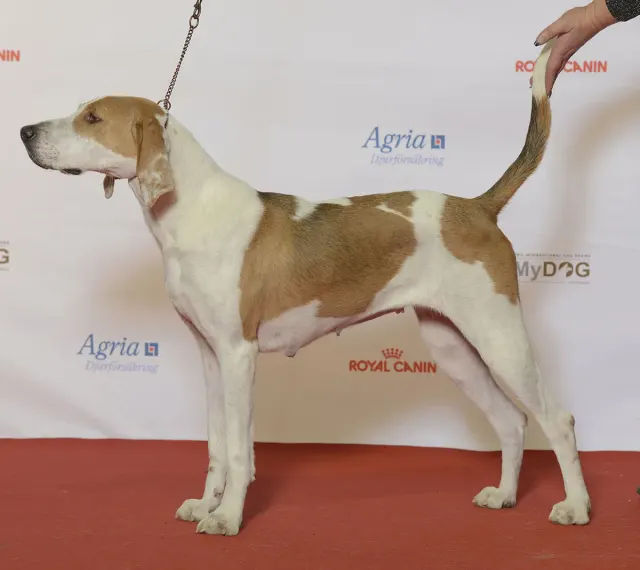
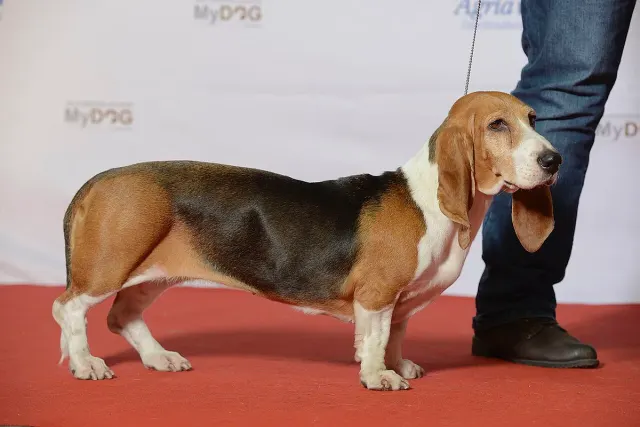
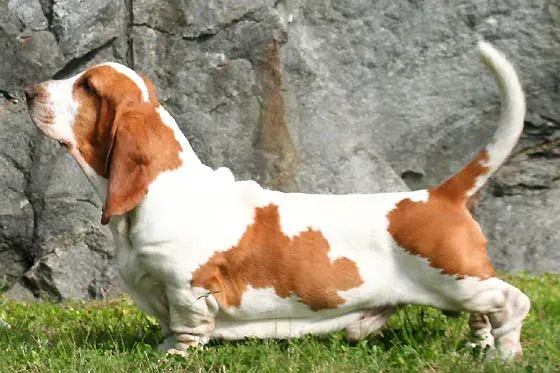
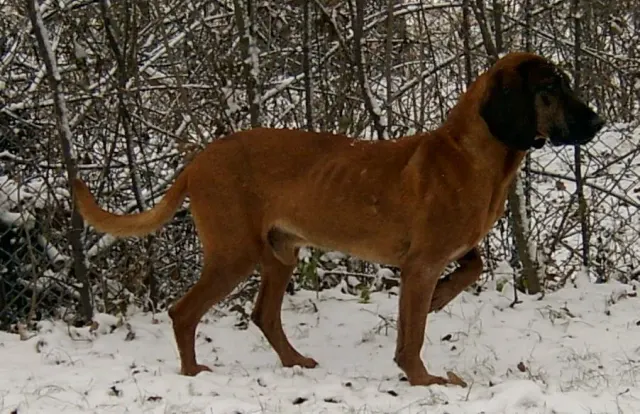
A small, shaggy and cheerful scent hound, the PBGV is curious, sociable and full of zest, but very nose-driven.
History and origins
The Petit Basset Griffon Vendéen comes from the Vendée in western France, where it hunted rabbit and hare in thick brush, protected by its harsh coat.
It was recognised as a breed separate from the Grand Basset Griffon Vendéen in the 20th century.
Appearance and colours
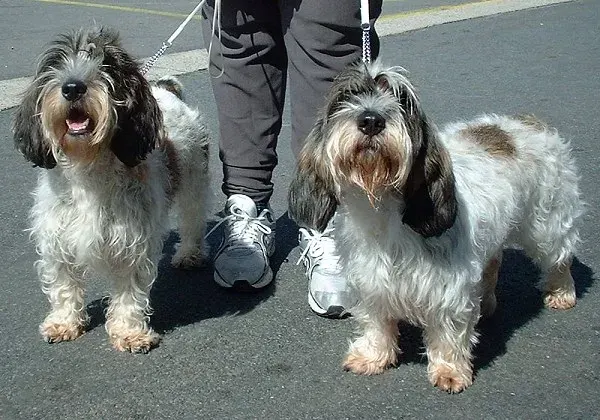
The FCI breed standard describes a small, active and vigorous hound with a slightly elongated body, a proud tail carriage, an expressive head and long-haired ears. The coat is harsh but not too long, never silky or woolly.
Colours include white and black, black and tan, white and orange, tricolour, and fawn or pale fawn with a black overlay, with or without white.
- Height at the withers: 34–38 cm (tolerance of 1 cm).
Temperament
Cheerful, outgoing and very sociable, the PBGV loves children, other dogs and visitors. It is curious and very talkative.
Independent and led by its nose, it needs patient, playful training.
With children and other pets
The standard describes a passionate, courageous hunter that loves brambles and scrub, docile but wilful; it calls the breed "a devil in the country, an angel in the house". It rates 4 out of 5 with children and 5 out of 5 with other dogs in our ratings.
- It usually gets on very well with other dogs.
- It has a loud voice and a strong nose.
Training tips
According to the standard, the PBGV long shared the Grand Basset's standard with only the size differing, until Abel Dezamy wrote a separate standard for a small basset reduced harmoniously in all its proportions. The standard says it must learn to obey from an early age. The Royal Kennel Club notes that its crisp coat needs regular grooming but should stay rustic. It rates 2 out of 5 for trainability in our ratings.
- Keep it on a lead or in safe, fenced areas: it follows scent.
- Start reward-based training early.
Health
This is a fairly robust breed. Some eye diseases, epilepsy, disc herniation and ear infections should be monitored.
Regular veterinary follow-up is recommended.
Common health issues in detail
A Danish population study of PBGVs registered from 1999 to 2008 estimated the prevalence of epilepsy at 8.9%, with an average onset at 26 months and mostly focal seizures; a strong litter effect suggested a genetic cause, and epilepsy was the main reason among dogs that had been euthanised (13.3%).
The Royal Kennel Club recommends as a minimum for breeding dogs a DNA test for primary open-angle glaucoma (POAG-5) and eye testing.
This is general information. For any question about your dog's health, consult a veterinarian.
Feeding
Good-quality food in measured portions suits it; it loves food.
Avoid excess weight to protect its back.
Exercise
It needs an hour or more of daily activity, with scent games.
Keep it on a lead outside fenced areas.
It can live in an apartment if well exercised, but it barks and may howl when left alone.
Grooming
Its harsh, shaggy coat needs weekly brushing; light stripping from time to time helps.
Clean its beard and ears.
Choosing a puppy
Choose a breeder who does the POAG-5 DNA test, eye-tests the parents and can tell you about epilepsy in the puppy's family.
- Ask for the parents' POAG-5 and eye results.
- Ask whether the parents or littermates have had seizures.
- Meet the mother: she should be friendly and lively.
Our guide on how to recognise a responsible breeder explains what to ask.
Similar breeds
The Grand Basset Griffon Vendéen is its larger relative. The Basset Hound, Beagle and Basset Artésien Normand are other small scenthounds.