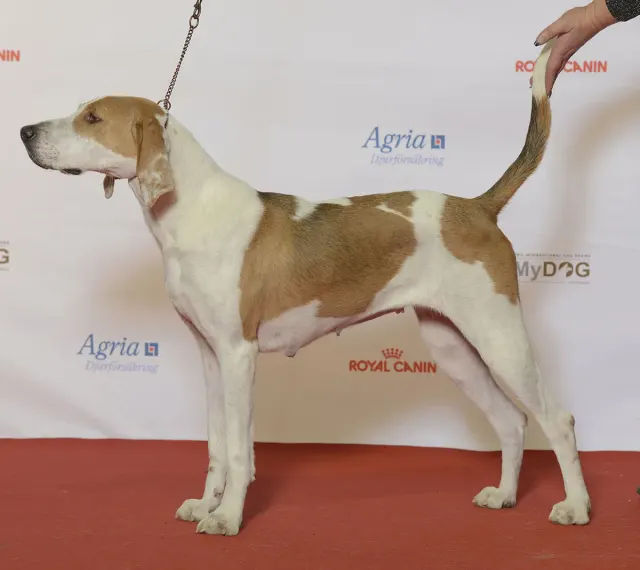
Larger and more powerful than the PBGV, the Grand Basset Griffon Vendéen is a cheerful, brave and very sociable scent hound.
History and origins
The Grand Basset Griffon Vendéen comes from the Vendée in France, where it hunted hare and roe deer over rough ground. Its harsh coat protected it from brambles.
It is recognised as a separate breed by the Fédération Cynologique Internationale.
Appearance and colours
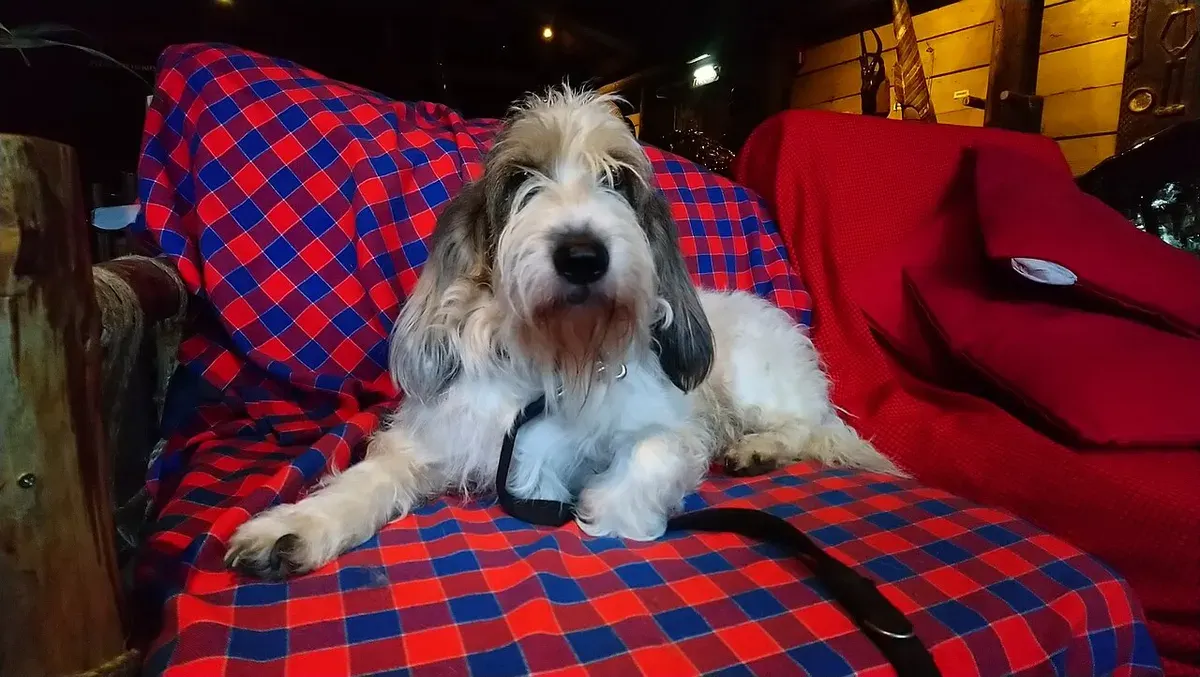
The FCI breed standard describes a slightly elongated, balanced and elegant dog with straight forelegs and the build of a basset; it must not look like a small Briquet. The coat is hard, not too long and flat, never silky or woolly, with marked eyebrows that do not cover the eyes.
Colours include white and black, black and tan, white and orange, tricolour, and fawn or pale fawn with a black overlay, with or without white.
- Height at the withers: 40–44 cm for males, 39–43 cm for females (tolerance of 1 cm).
Temperament
Cheerful, sociable and brave, the GBGV loves the company of people and other dogs. It is independent and highly scent-driven.
Patient training and plenty of activity are needed.
With children and other pets
The standard describes a fast, well-voiced, passionate hunter that loves brambles and scrub; a little stubborn but well behaved, it is up to the owner to take charge. It rates 4 out of 5 with children and 5 out of 5 with other dogs in our ratings.
- It usually gets on well with other dogs.
- It has a loud voice.
Training tips
According to the standard, the Grand Basset Griffon Vendéen comes, like all bassets, from larger hounds, here the Grand Griffon; selection began in the late 19th century and its size was fixed at about 43 cm, which is needed to catch hares. The standard calls it the fastest of the scenthound bassets. The Royal Kennel Club calls it the tallest of the basset breeds. It rates 2 out of 5 for trainability in our ratings.
- Keep it on a lead or in safe, fenced areas: it follows scent.
- Use patient, consistent, reward-based training.
Health
This is a fairly robust breed. Epilepsy, some eye conditions, ear infections and back problems should be monitored.
Regular veterinary follow-up is recommended.
This is general information. For any question about your dog's health, consult a veterinarian.
Feeding
Food matched to its activity, in measured portions, suits it.
Avoid excess weight.
Exercise
It needs one to two hours of daily activity, ideally in nature, with tracking.
Keep it on a lead outside safe areas.
It suits a house with a garden, preferably in the countryside, better than an apartment.
Grooming
Its harsh coat needs weekly brushing, with light stripping from time to time.
Clean its ears and beard.
Choosing a puppy
The FCI standard says only healthy dogs with typical breed conformation should be used for breeding.
- Ask what health checks the parents have had.
- Meet the mother: she should be friendly and lively.
Our guide on how to recognise a responsible breeder explains what to ask.
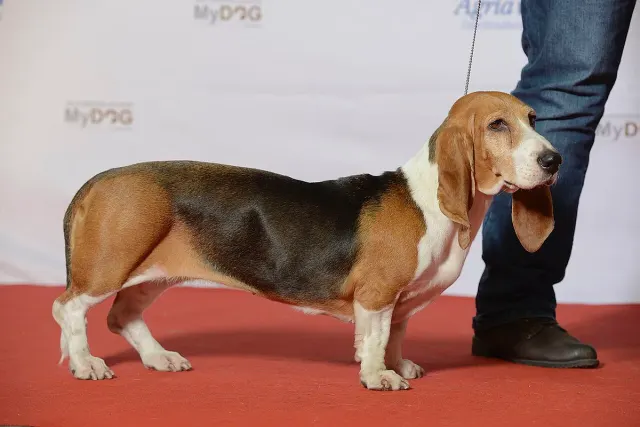
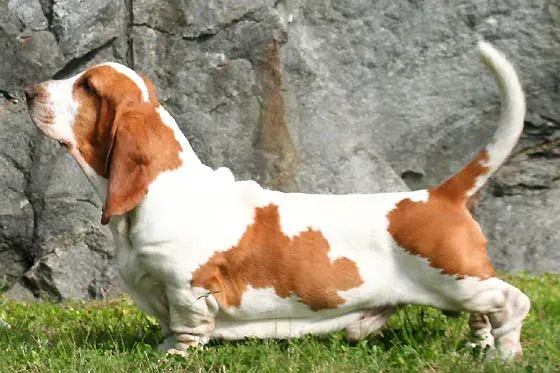
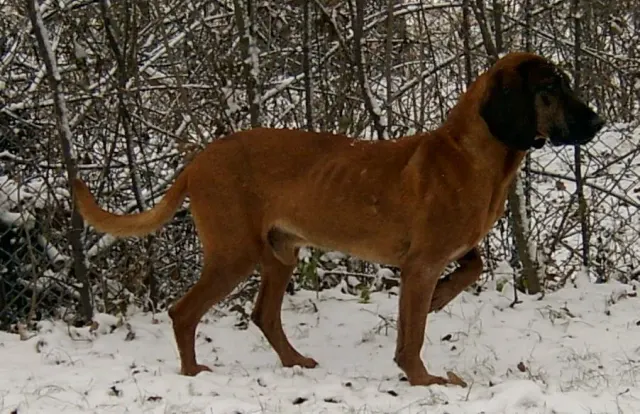
Similar breeds
The Petit Basset Griffon Vendéen is its smaller relative. The Basset Hound, Basset Artésien Normand and Beagle are other small scenthounds.